Stone walls, a black-tiled steeple, a cross. Organised faith, ruined, set against the moor's most readable open ground.
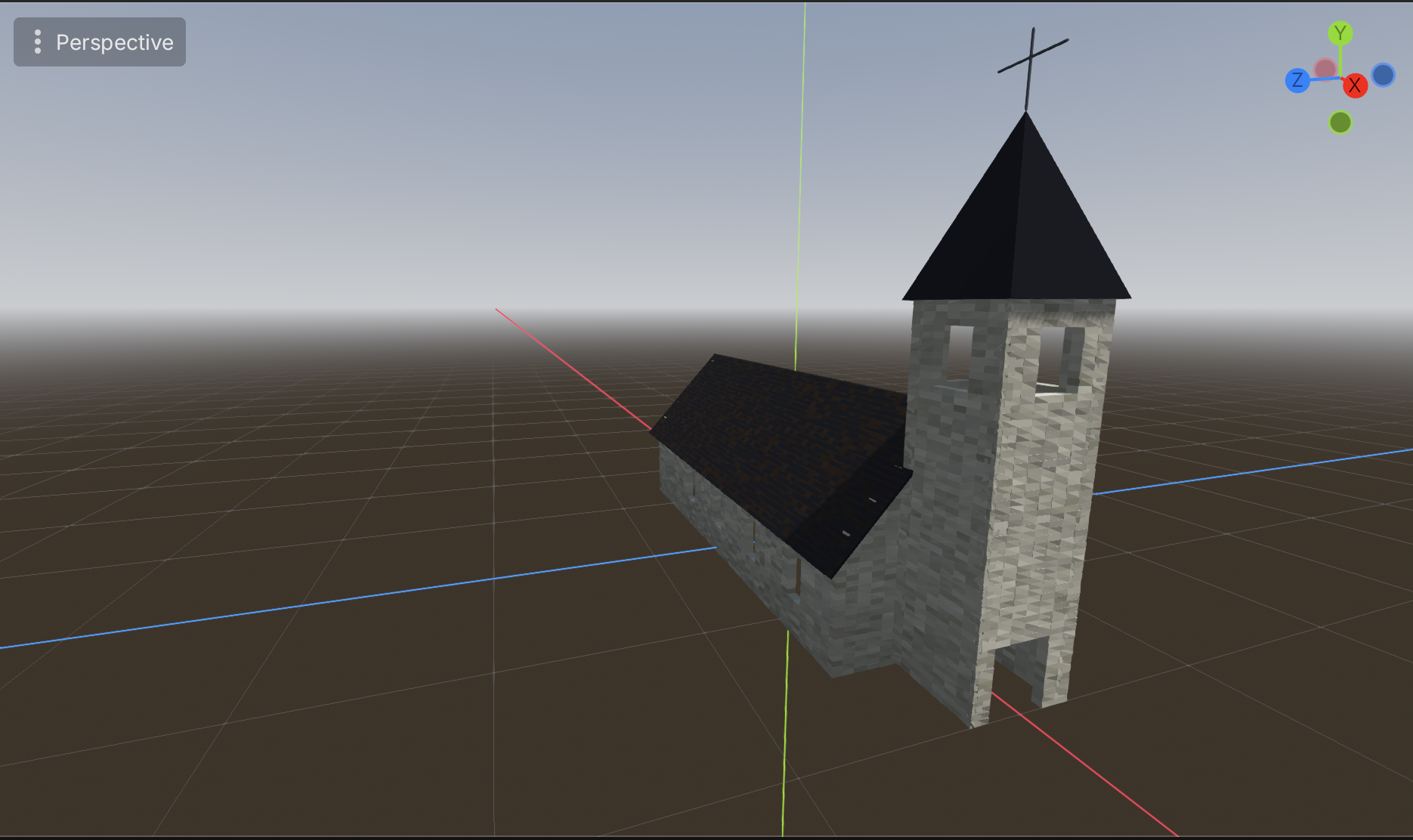
The church belongs to a different kind of mind than the altar does. The altar implies a coven: small, hidden, working in a circle around something specific. The church implies a congregation. It implies a builder, a quarry, a stonemason, a date. It implies that whoever was here was trying to do this in public, with stone, on the assumption that the building would outlast them. That assumption was correct. They are gone. The church is still here.
That's the load this single piece of geometry has to carry. The church is one of three or four answers the world has tried against the moor, and the only one that left a building behind.
On the plain, in daylight
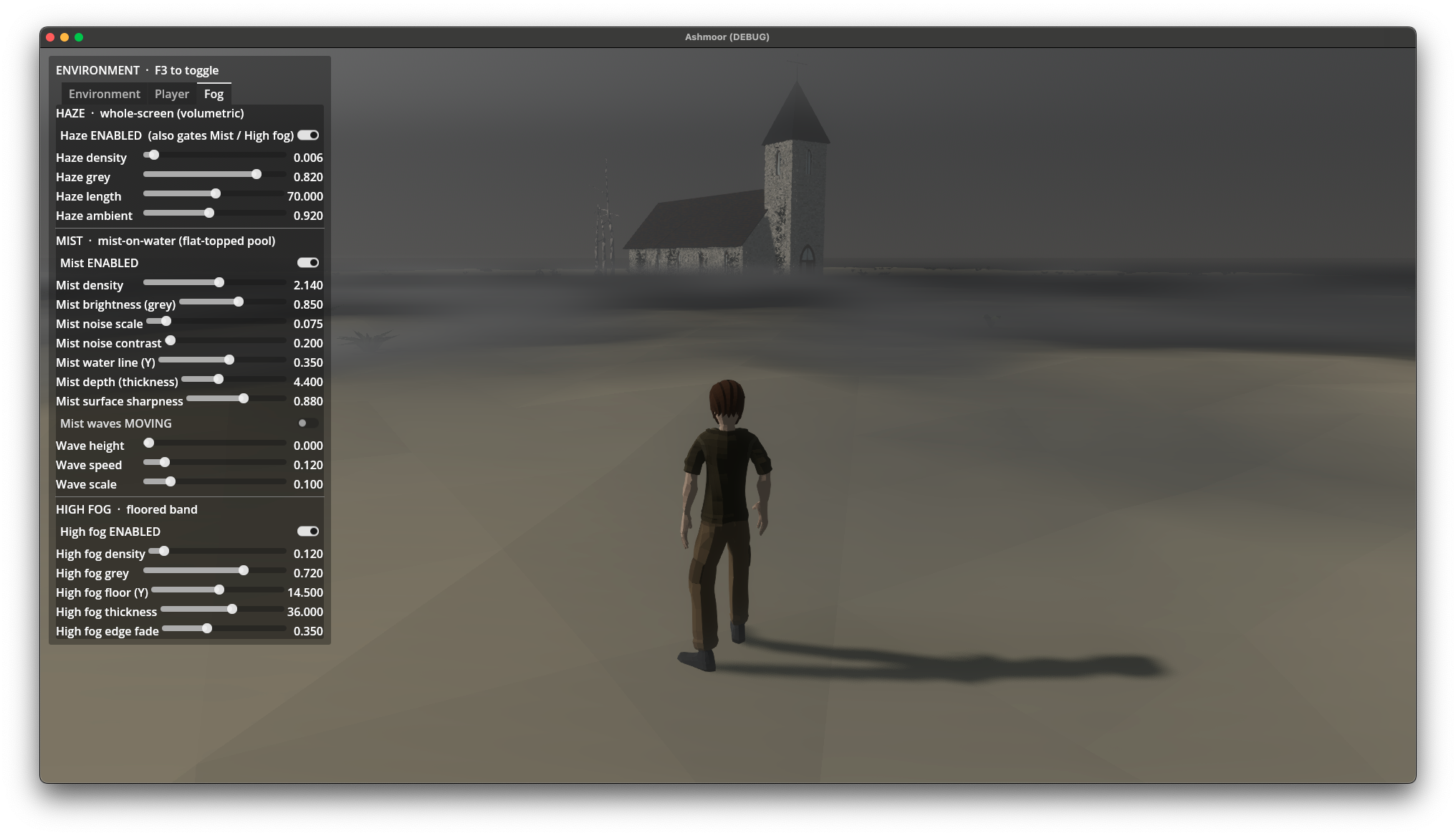
The church sits on a featureless plain, never inside the forest. A single readable silhouette is the cleanest available test for the fog stack. If the church reads at 80 metres through haze, the fog is honest. If it doesn't, the fog needs fixing.
It also tells the project something about the church's eventual placement. Whatever clearing this building ends up in, it has to be approached across openness. The whole point of a church silhouette is that you see it before you reach it. Place it inside a thicket and the silhouette is wasted. Place it at the end of an open path and half the story is already told before the player has read a single in-world detail.
The same building, at night
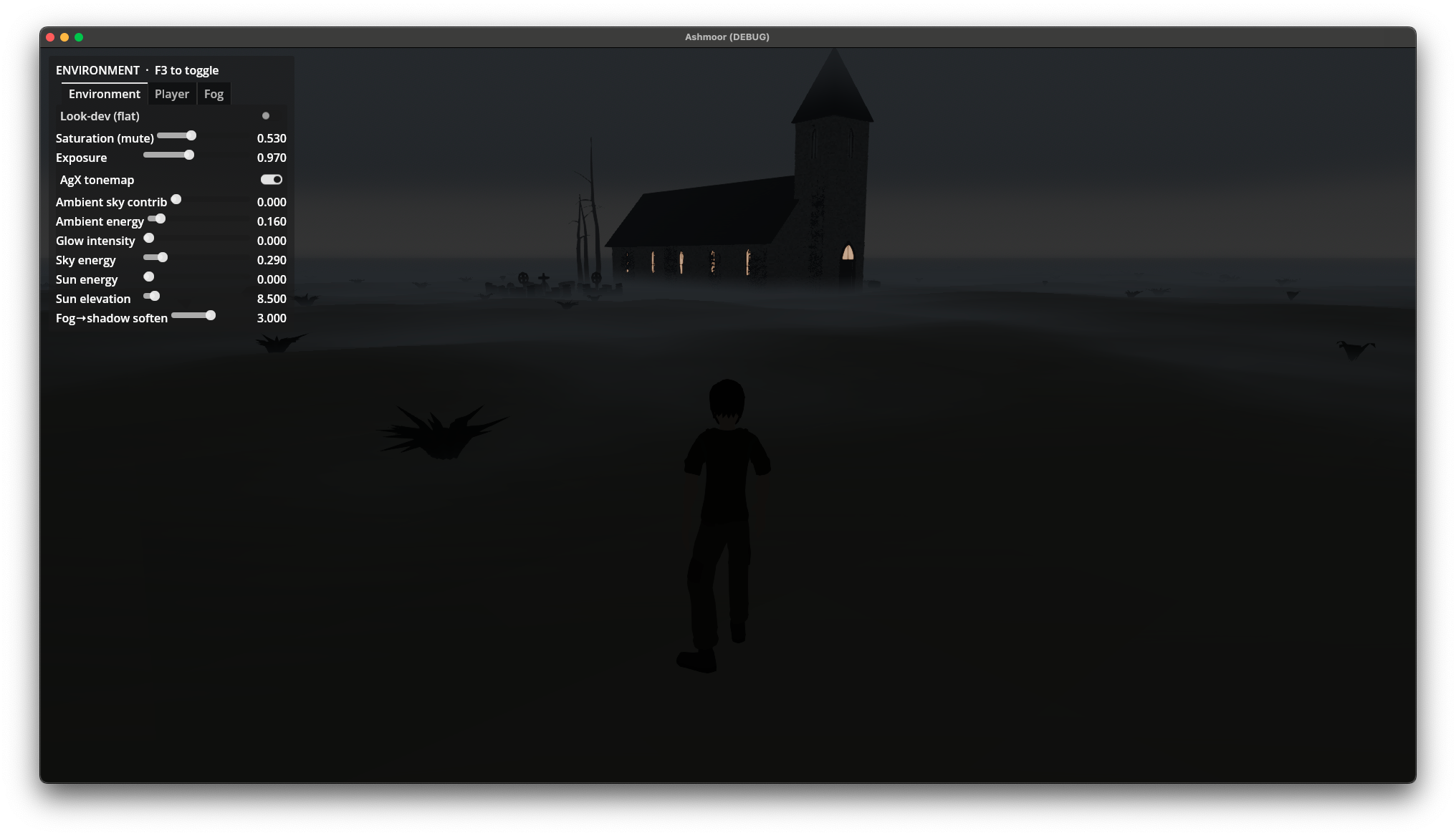
Night is the harder test. If the wall material is doing too much of the work, the church disappears into the dark. If the silhouette is honest, it survives. This frame is reassurance. The steeple and cross still read. The body of the building punches a clean negative hole in the grey sky.
There's a small thematic gift in this. The church at night reads as a shape before it reads as a building. You see the cross first. Then the steeple. Then the body. In that order. Which is roughly the order the building wants you to read it in. The cross was the argument. The steeple was the announcement. The walls were the protection. By night, with materials stripped down to silhouette, all three meanings stack cleanly. The building tells you what it is before you can see what condition it's in.
Adding the trees
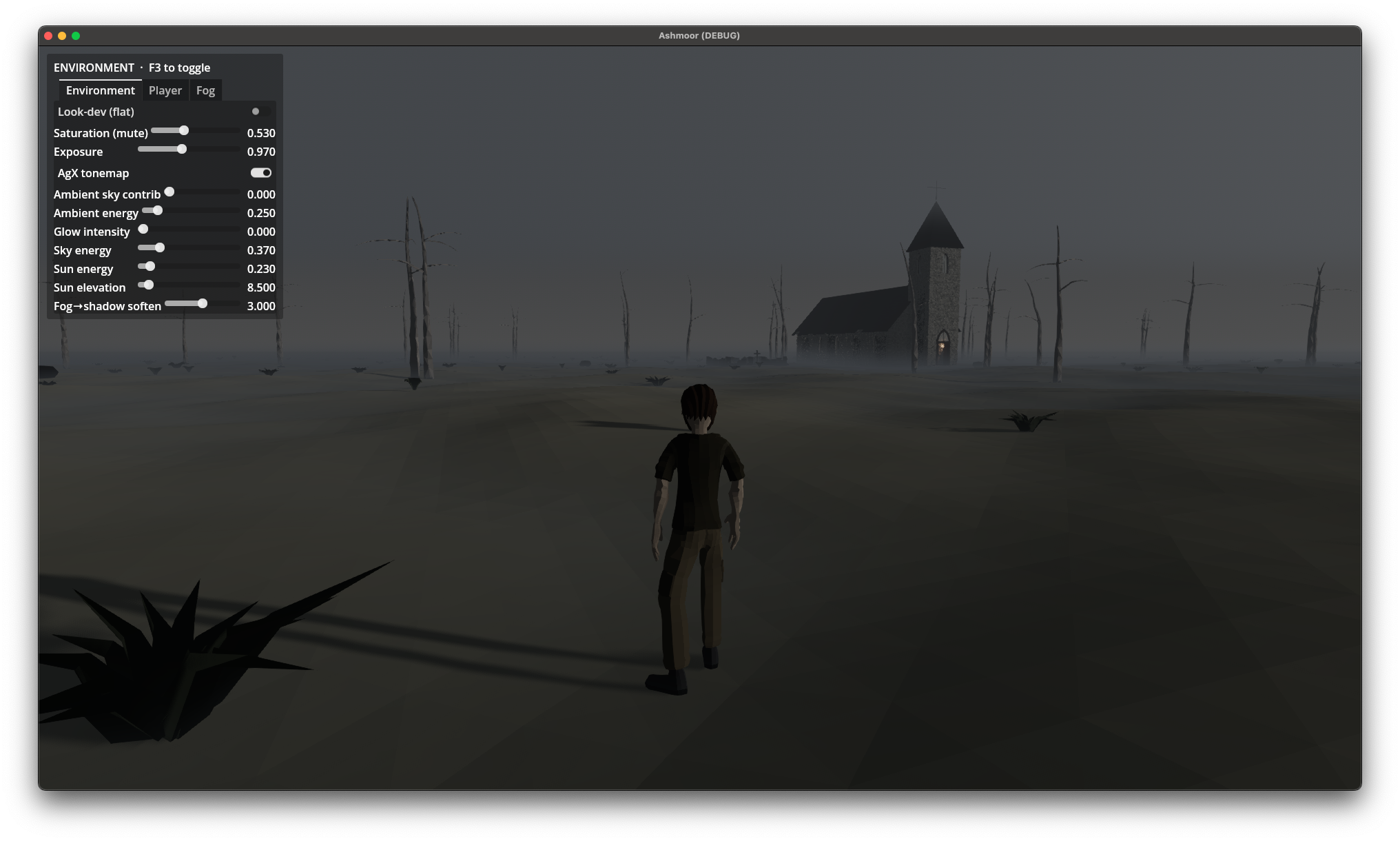
The pure plain was a useful diagnostic. It wasn't a real place. Real places have intermediate readable silhouettes, things between the eye and the subject that the fog can do something to. A sparse band of bare-branched dead trees between the spawn and the church changes the read entirely.
The composition resolves. The dead branches become the fog's depth cue. They read at three distances at once, and the church becomes the thing at the end of that recession. The approach is a passage now, rather than a clear walk. You arrive at the church through the dead, which is the right way to arrive.
What's missing
The church has no interior. The cross is geometry, with no symbolic consequence yet. The walls are one stone material with no weathering. None of that hurts the silhouette test, which was this scene's job. The church will need a real interior before it's a real setpiece: a bell in the steeple, a book at the altar, candles, the person who would still be here if they could be. All of that, eventually, in its own entry.