The test scene gains its first dropped props: a hand-lantern, a campfire, and a stone crucifix. The job is the lighting, the silhouettes, and whether the moor has anything to say about each object.
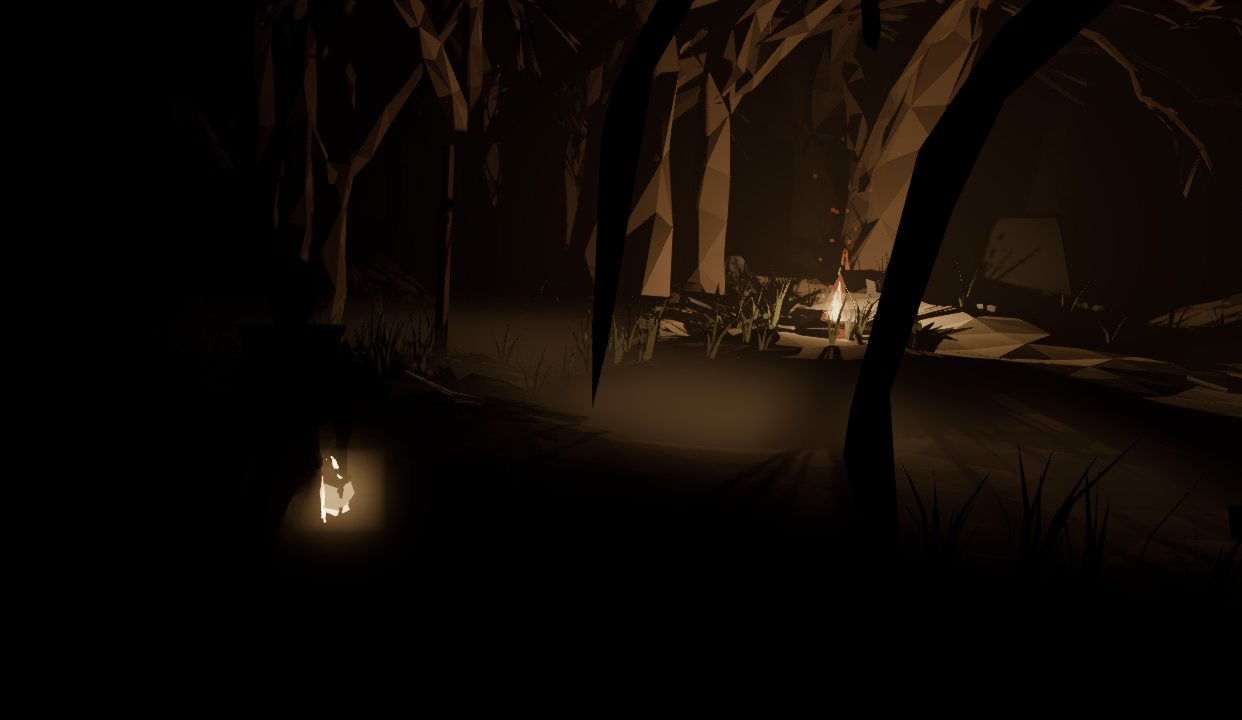
The first prop test was the simplest possible pairing: a lantern at the edge of the scene, a campfire in the clearing. Nothing fancy was modelled for either. The question was whether the volumetric haze was sympathetic to point lights at distance, because if it isn't, every later setpiece falls apart.
It is. The campfire's glow halos through the fog at the right rate. The lantern picks out the immediate foreground without bleeding into the haze. The geometry is doing almost none of the work in this frame. Every bit of the mood is fog plus lights. That ratio is the right one for Ashmoor. Any scene that needs detailed geometry to read at night is an over-designed scene.
The crucifix at night
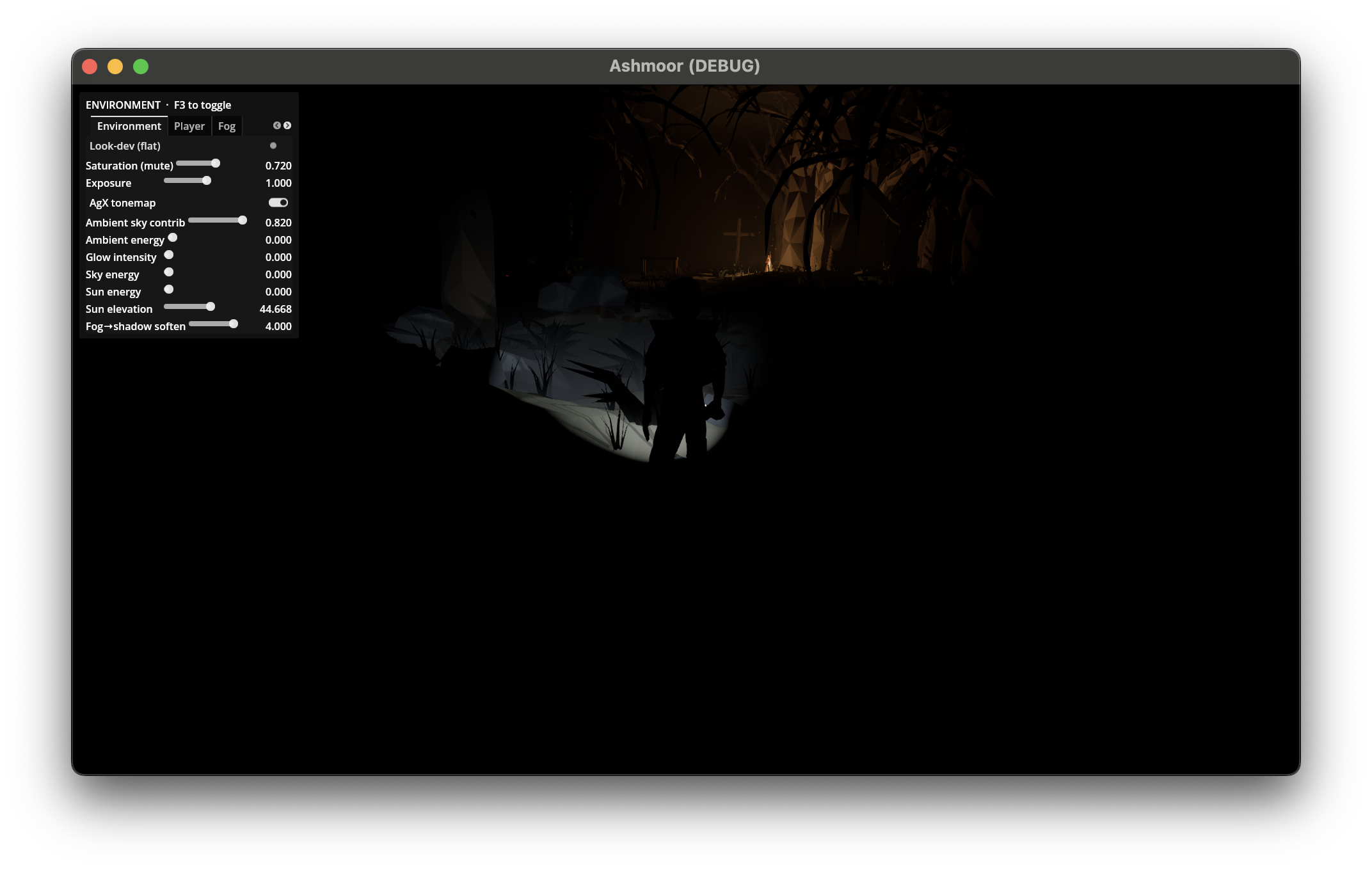
The crucifix asks a different question. A non-emissive prop, a single piece of stone geometry, no light of its own. Can it still read at night settings, or does the moor swallow it?
Barely. The crucifix needs the moon's contribution pushed a hair, or it has to sit close to another light source, or it disappears.
That's a thesis, not a problem. In Ashmoor, no prop reads by default. Everything visible at night has been given a reason to be visible: a moonbeam falling on it, a candle near it, a fire across the clearing. The moor doesn't volunteer information. It withholds, and the player learns to provide their own light if they want to see anything.
The crucifix is also, separately, the first object in the project that means something specific. A lantern is a tool. A fire is shelter. A crucifix is a claim. Whoever planted it in this clearing was making an argument about what's out here and what to do about it. The argument doesn't have to be right. The moor only has to let it stay visible long enough for the player to notice.
Stress-testing the library
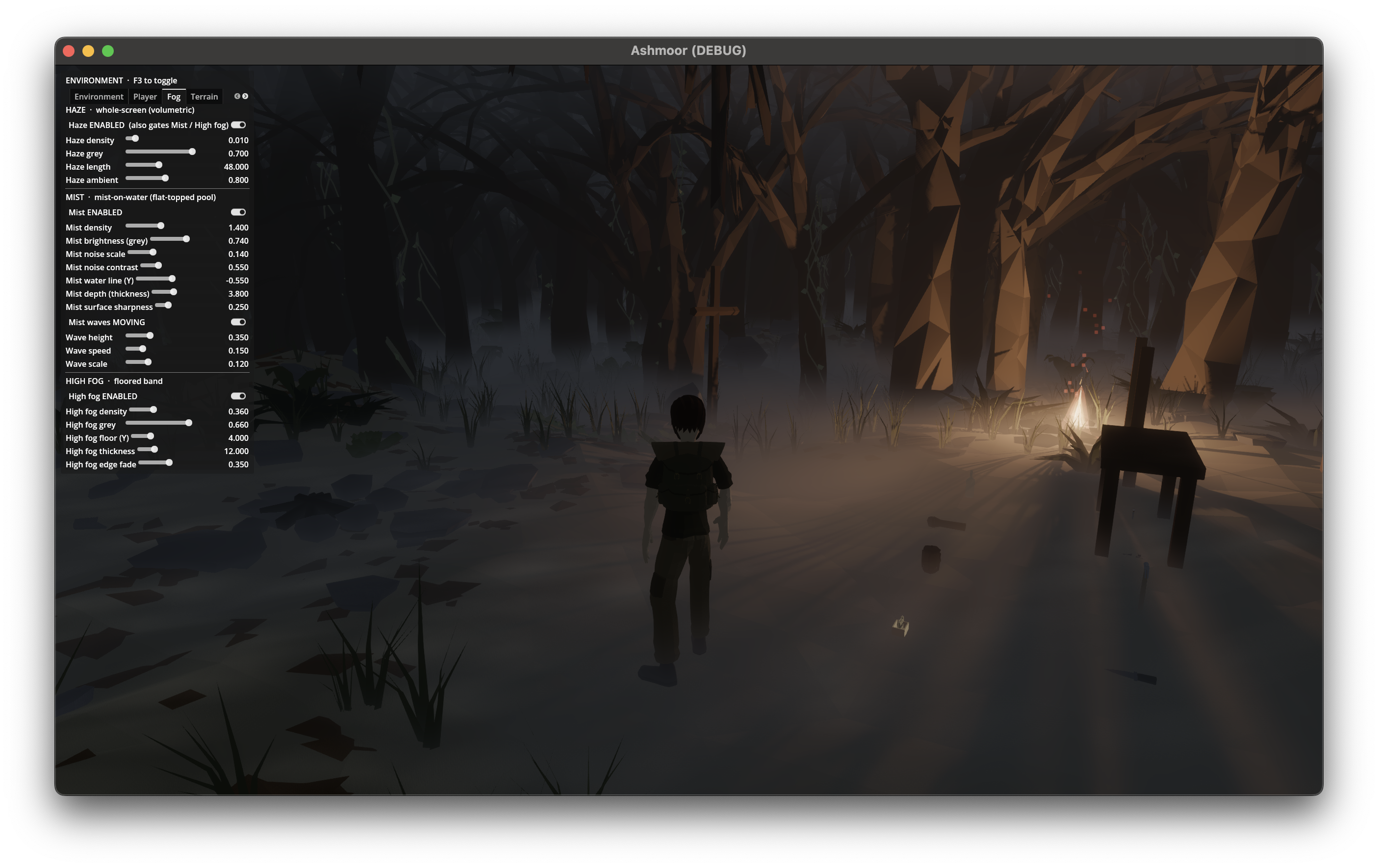
Half a dozen props in the same frame. A fence post, a lantern, scatter elements. The point is less about composition and more about whether one new prop breaks the others. None of them do. Everything sits in the moor on the same terms.
The lesson sits underneath all subsequent work: lighting first, prop second. The atmosphere has to be honest. Props live inside it. Anything that reads only when a fresh light is pointed at it is the wrong size, the wrong colour, or the wrong shape for the world it's in. The moor has rules. Everything placed in it obeys them.