Four prefabricated modules in a clearing, ringed by barbed wire and floodlit by sodium lights. The moor's only piece of harsh modernity, and the most recent answer the world has tried against it.
The outpost is where the project's third answer to the moor lives. Not the way the altar's people answer, with candles and one stone. Not the way the church's people answer, with masonry and inherited symbols. The way an institutional camp answers: with a perimeter and an inventory. Somebody came out here with a method. The camp is what's left of the method.
The people who built this camp belong to a later entry. The visual grammar has to be in place before they can step into it. This entry is the shell: the fence, the modules, the lights.
The hardware
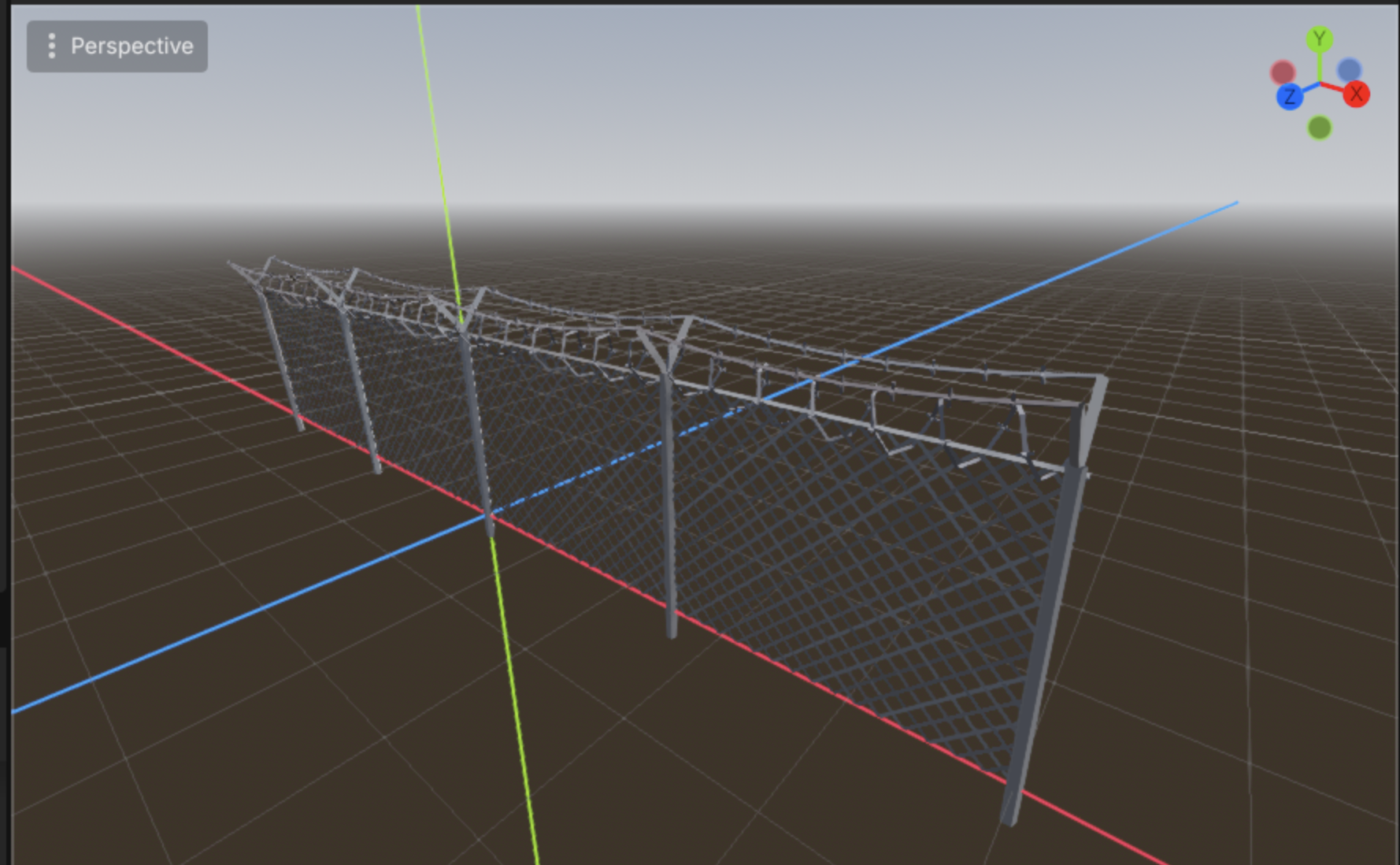
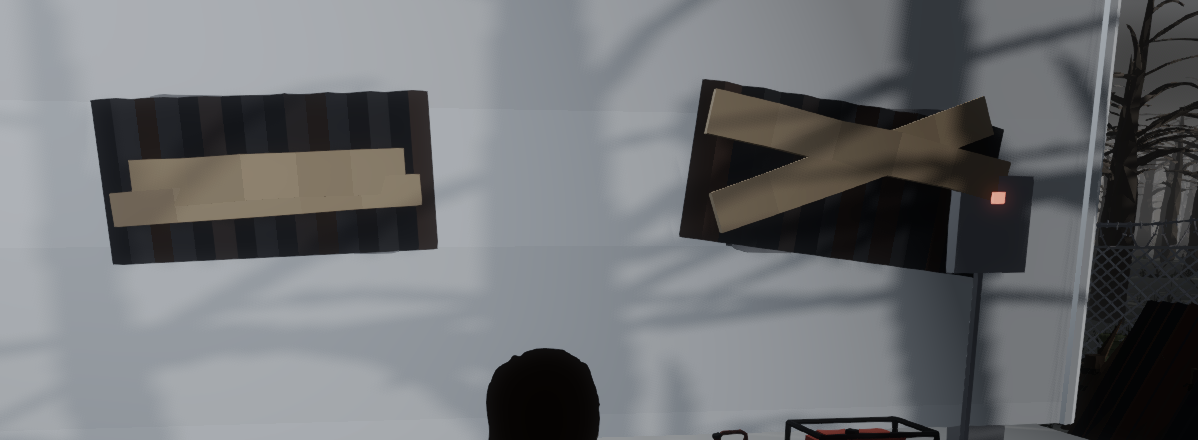
Two props anchor the setpiece: a barbed-wire fence panel (chain-link with a curl of concertina along the top) and the planked-over window detail for the modules. Both have silhouettes that have to read at distance. Barbed wire especially. Three poly densities live in the project so the streaming distance can pick the survivor.
The planked windows do quiet narrative work. They're the only prop in the camp that admits something went wrong. The fence implies people kept things out, deliberately, from day one. The boarded windows imply people kept something out, urgently, after the fact. Those are two different stories, and both are true.
Daylight passes
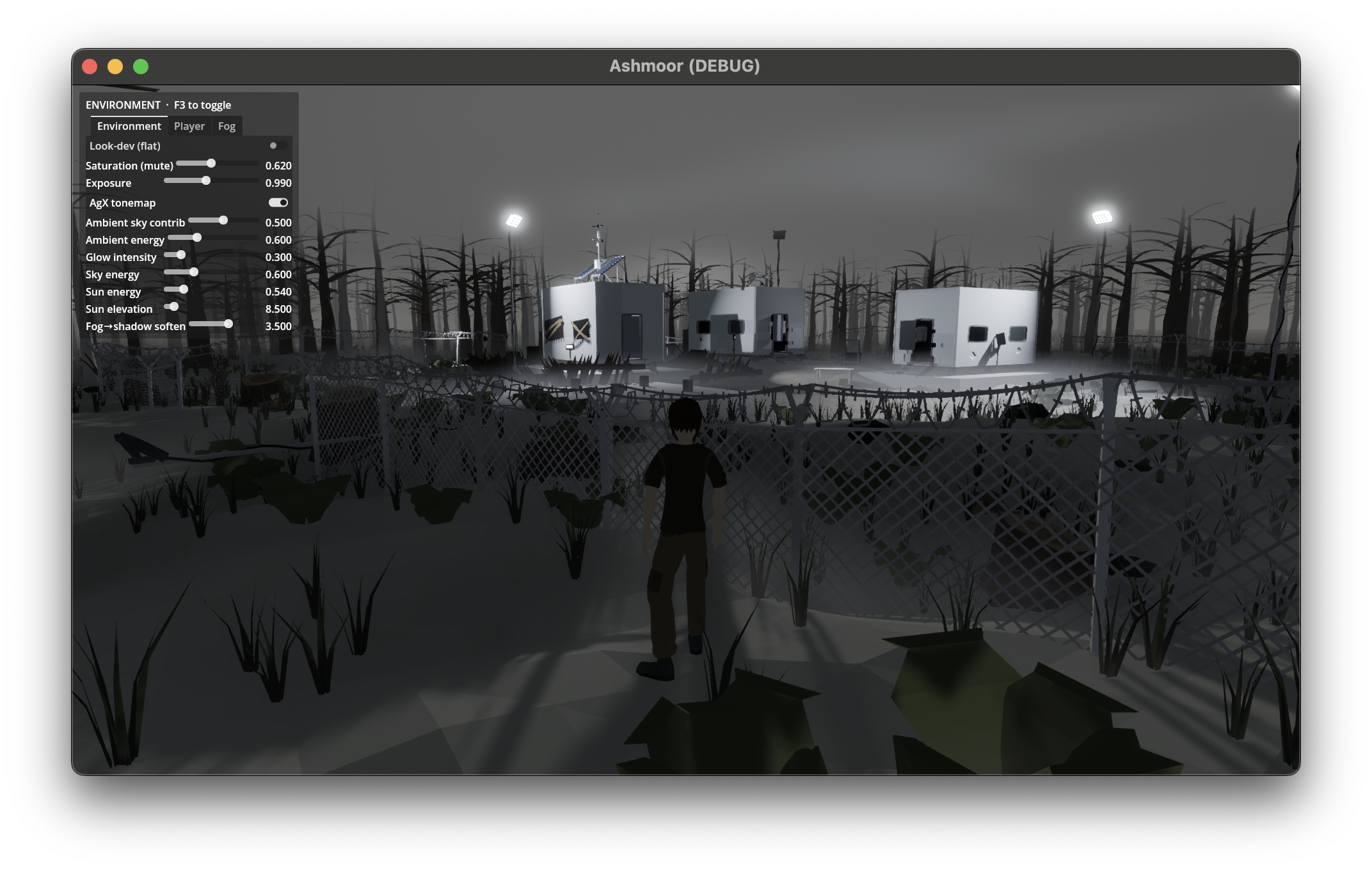
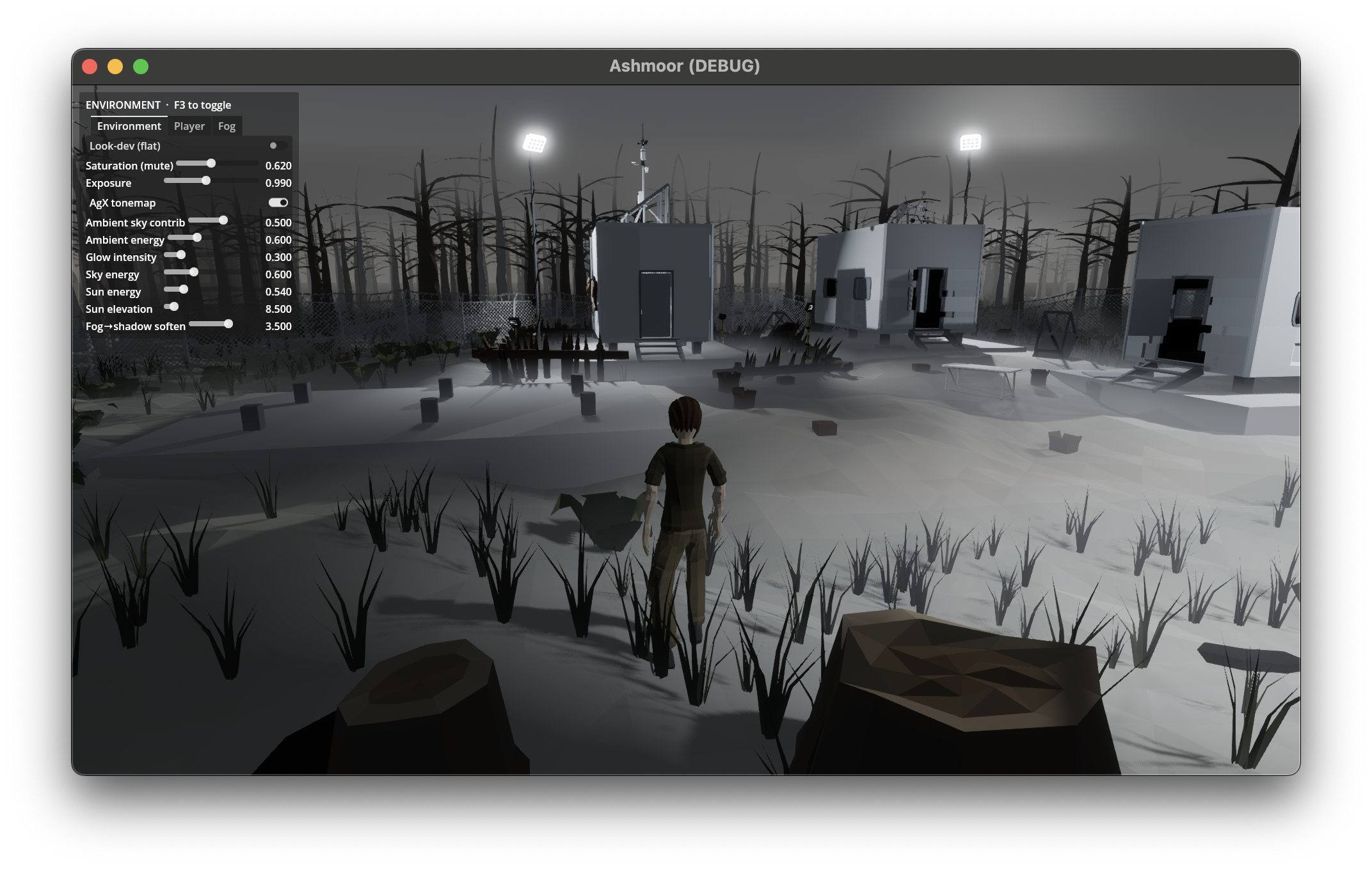
Daylight is the unforgiving test. Every paint chip, every clean polygon, every too-clean material that would hide in fog is naked. The outpost survives it, barely. The modules want weathering passes. The silhouette and layout are doing their job.
What's surprising in daylight is how recently-built the camp still reads. The cabin will read ancient by design. The church reads weathered, with stone and slow decay. The camp reads contemporary. Months old, maybe a year. That's the right reading. Whatever called these people here is the most recent answer the world has tried, which is why their answer is the most exposed. Stone has had centuries to settle. Prefab modules have had a season.
The lighting concept
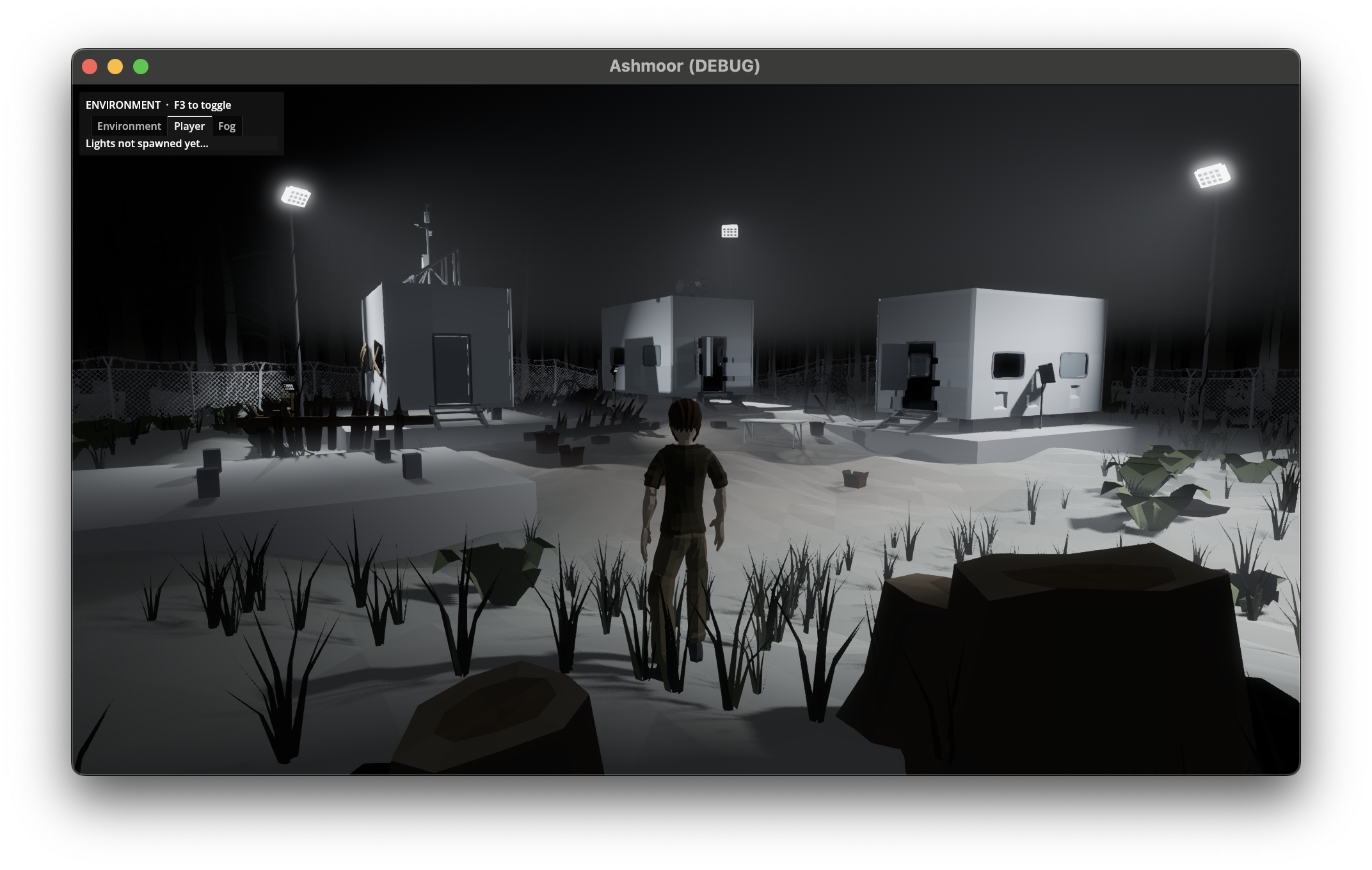
The lighting concept is the inverse of every other location in Ashmoor. Elsewhere the warm light sits in the middle and the dark presses in. Here the cold light points outward from the perimeter, and the centre of the camp is the safe place. Same single-warm-light economy, flipped polarity.
The cabin's fire is warm because the fire is the centre of the world. The chapel's votives are warm because warmth is what equanimity looks like from outside. The outpost's floodlights are cold because they aren't for the people inside. They're for what's outside. Light as boundary. Light as denial.
The fixtures themselves are pointing into the dead forest, which means every silhouette you can see is thrown by the camp itself. The light isn't there to illuminate the moor. The light is there to keep the moor out. The shadows that creep along the ground at night are the camp's own. The moor doesn't have shadows. The camp has shadows. The camp is the thing the moor is currently shadowing.
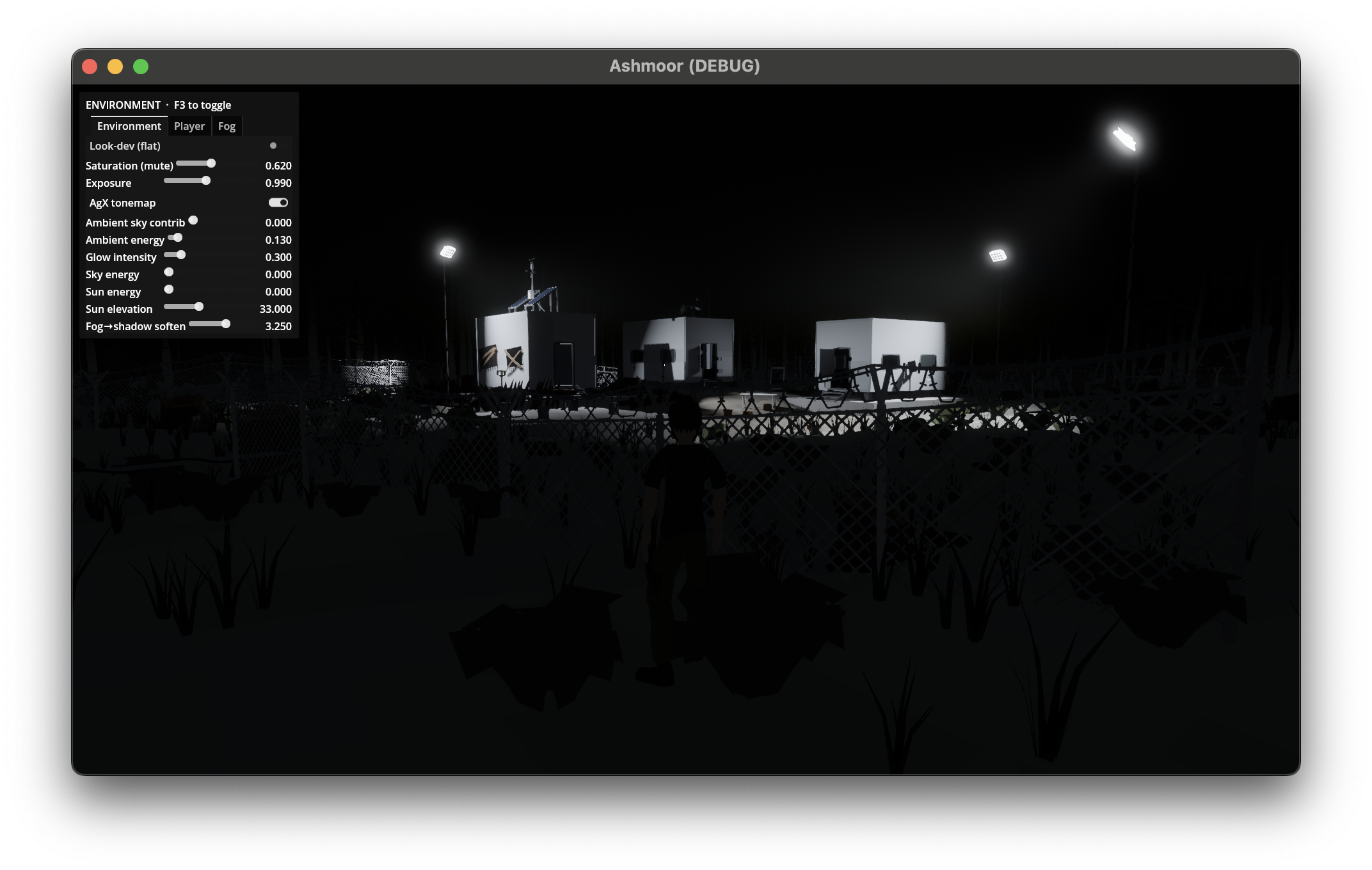
The "dark night" pass tests a worst case. If the outpost still reads when only one or two floodlights are alive, that is, when the player has stayed long enough that the camp is failing around them, the place still works dramatically. It does.
That failing state is the camp's most likely real state in the finished game. The camp shouldn't look like it's working. It should look like it was working, recently, and is on its way to not. The half-extinguished frame is closer to the truth than the fully-lit one. Method doesn't fail all at once. It fails one floodlight at a time.
What's left
The modules are still sealed exterior shells. Getting into them is the next session's job. The plan is for one to be a science lab, one a barracks, one a supply room, one demolished. Each module is a "demountable", a prop family that allows a base module to take different fitouts via inherited scenes. The chairs, jerry cans, solar panels and weather stations that'll go inside live in the prop library. This entry is the shell.