A log cabin under a thatched roof, a tripod cooking fire out front, an effigy nailed above the door, and a ring of trees that closes around it like a hand. The oldest answer to the moor, finally a place.
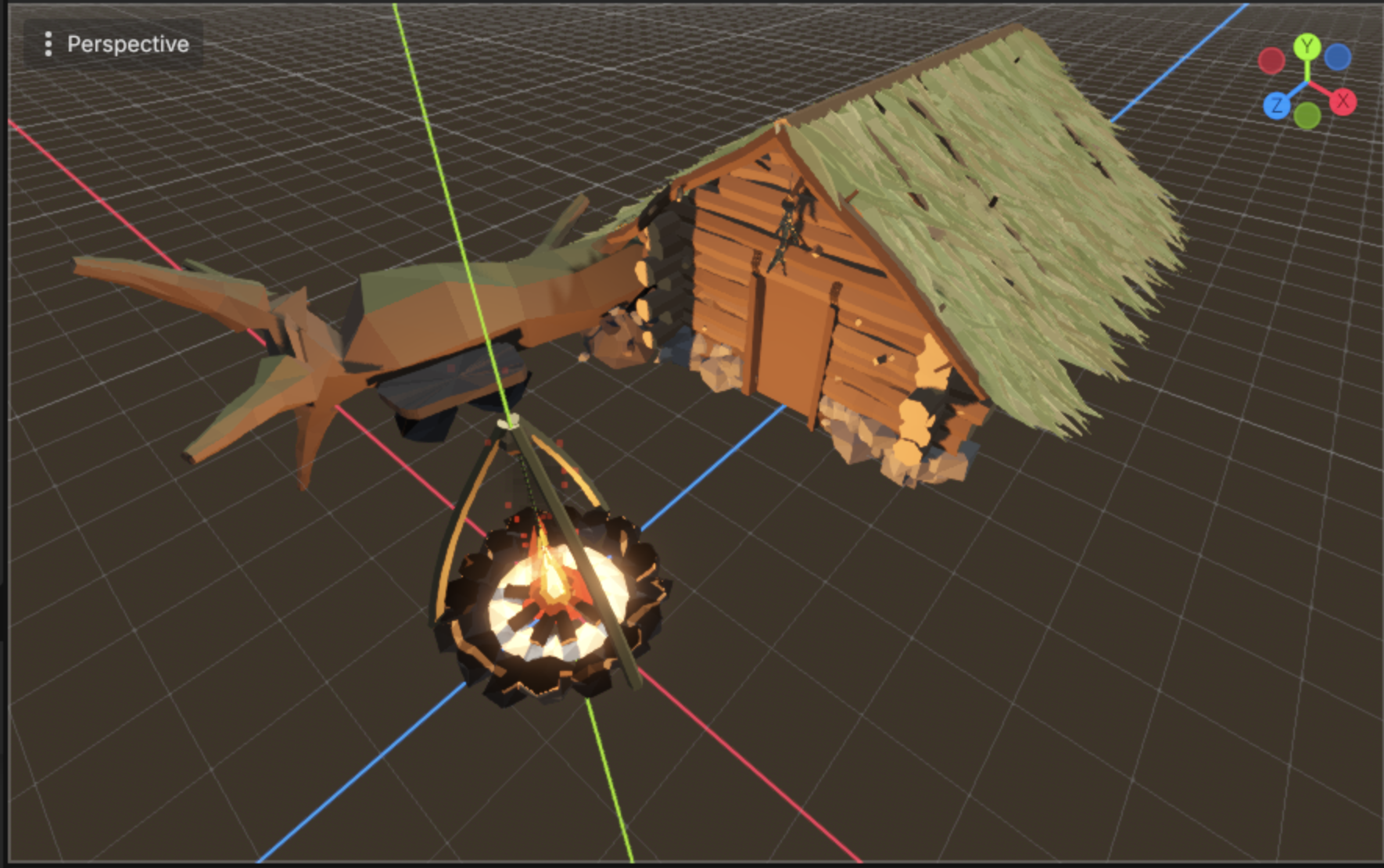
The cabin's specifics arrived first: log walls, thatched roof, a hide-draped door, antlers nailed above. What landed for this entry was the composition. The cabin doesn't stand alone. It sits inside a small forest ring of its own, with the cooking tripod and fire pit pulled forward of the door so the eye reads fire first, shelter second.
That ordering is the entire thesis of the place. The fire comes first because the fire is older than the building. The cabin is what the fire eventually grew into. People sat in a circle around something burning for a long time before anyone thought to put walls up, and the cabin's design has to remember that. So the fire is at the front, in the open, and the cabin is the thing the fire backs into when it needs to.
This is the third answer to the moor in the project so far. Older than the church, older than the outpost, possibly older than the moor's affliction itself. The cabin doesn't argue with the world. It doesn't try to keep the world out, and it doesn't try to consecrate the world. It tries to live alongside the world, on terms inherited from people who knew the land before any of this got strange.
The forest ring
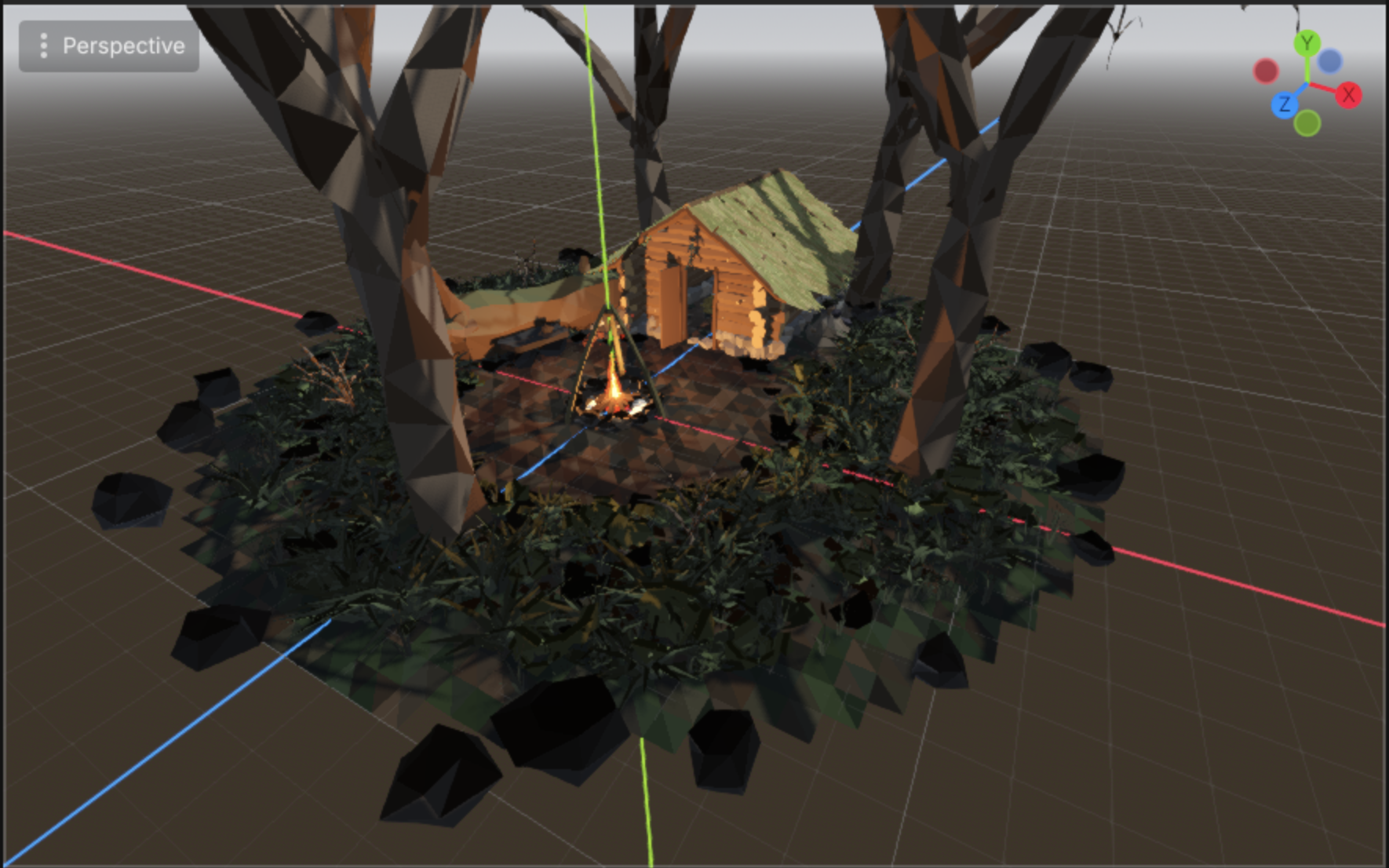
The forest ring uses the same procedural tool that places general clearing scatter elsewhere, configured tighter. Fewer trees, taller, leaning slightly inward. The ground scatter gradient is the trick: sparse at the ring, dense at the centre. The eye is funnelled toward the fire without anyone having drawn an arrow.
This is the arrangement language from the altar entry, scaled up. The altar was a ring of candles around a stone. The cabin is a ring of trees around a fire. Same vocabulary, different cadence. The altar was made in an evening. The ring of trees was made by decades of someone choosing which ones to fell and which ones to leave. The cabin's answer to the moor is the only one in the project that uses time as a building material.
The roof and the door
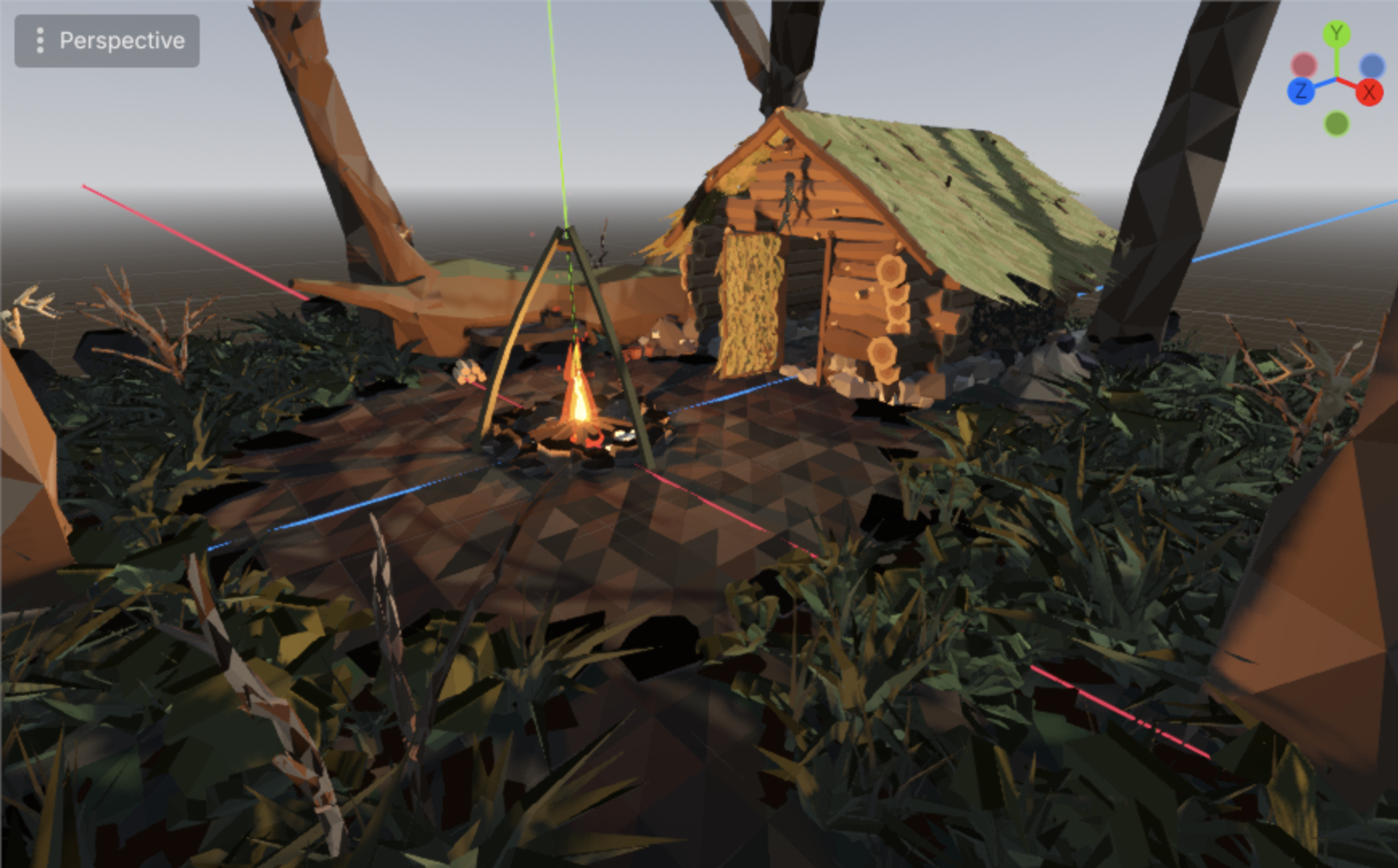
The thatched roof carries most of the cabin's silhouette. Faceted thatch is delicate work. Too few polygons and it reads as a tarp. Too many and it loses the Ashmoor language. The compromise is stacked rectangular panels with their normals jittered slightly so the lighting catches each row.
The door is a panel of hide stretched over a log frame. No knob, no hinge geometry. Just the implication that you push it aside to enter. That's all the door needs to be. A door with a handle is a door from a world where doors are property. A hide flap is a door from a world where the threshold matters more than the lock.
The effigy
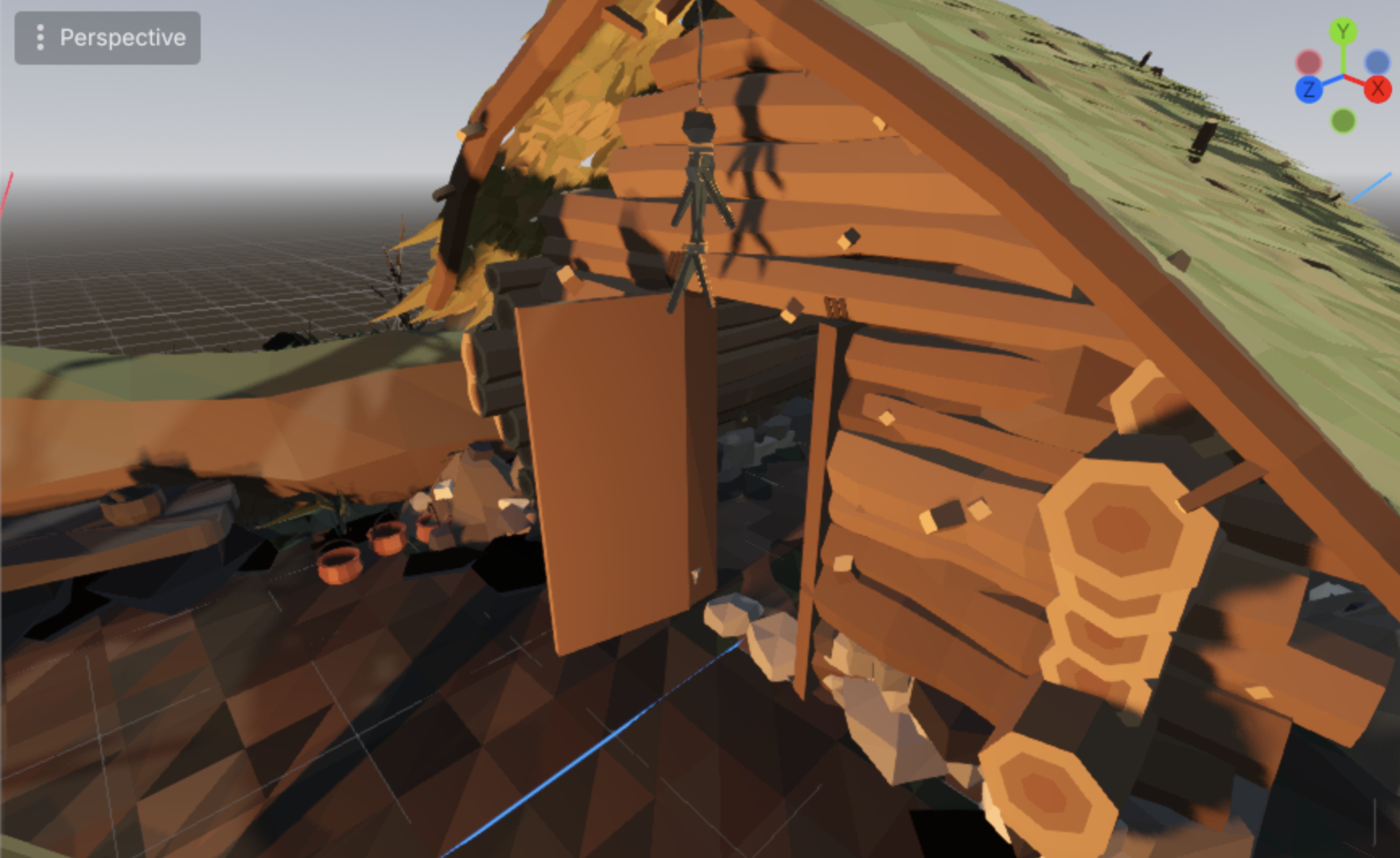
The effigy above the door is the prop that makes the cabin what it is. Antlers fixed to a bound-branch torso, hung above the lintel by a length of cord. A single low-poly mesh painted with a vertex-colour gradient, doing most of the narrative work of the entire setpiece in about a hundred triangles.
The effigy pays for everything else. The cabin without the effigy is a cabin. The cabin with the effigy is a declaration. It says that whoever lives here didn't arrive in the moor by accident. They are here on terms, and the terms involve things with antlers, and you might want to think about whether you understand those terms before you knock.
The crucial reading, the one every entry that touches this place will have to keep careful with, is that the effigy was hung for the moor, by someone who thinks of the moor as a relationship rather than a problem. The effigy was never a warning at the moor, and never a charm against it. Whatever's out there, the cabin's occupant is on speaking terms with it. The effigy is how you recognise the house of a person who speaks the same language.
In the moor, at night
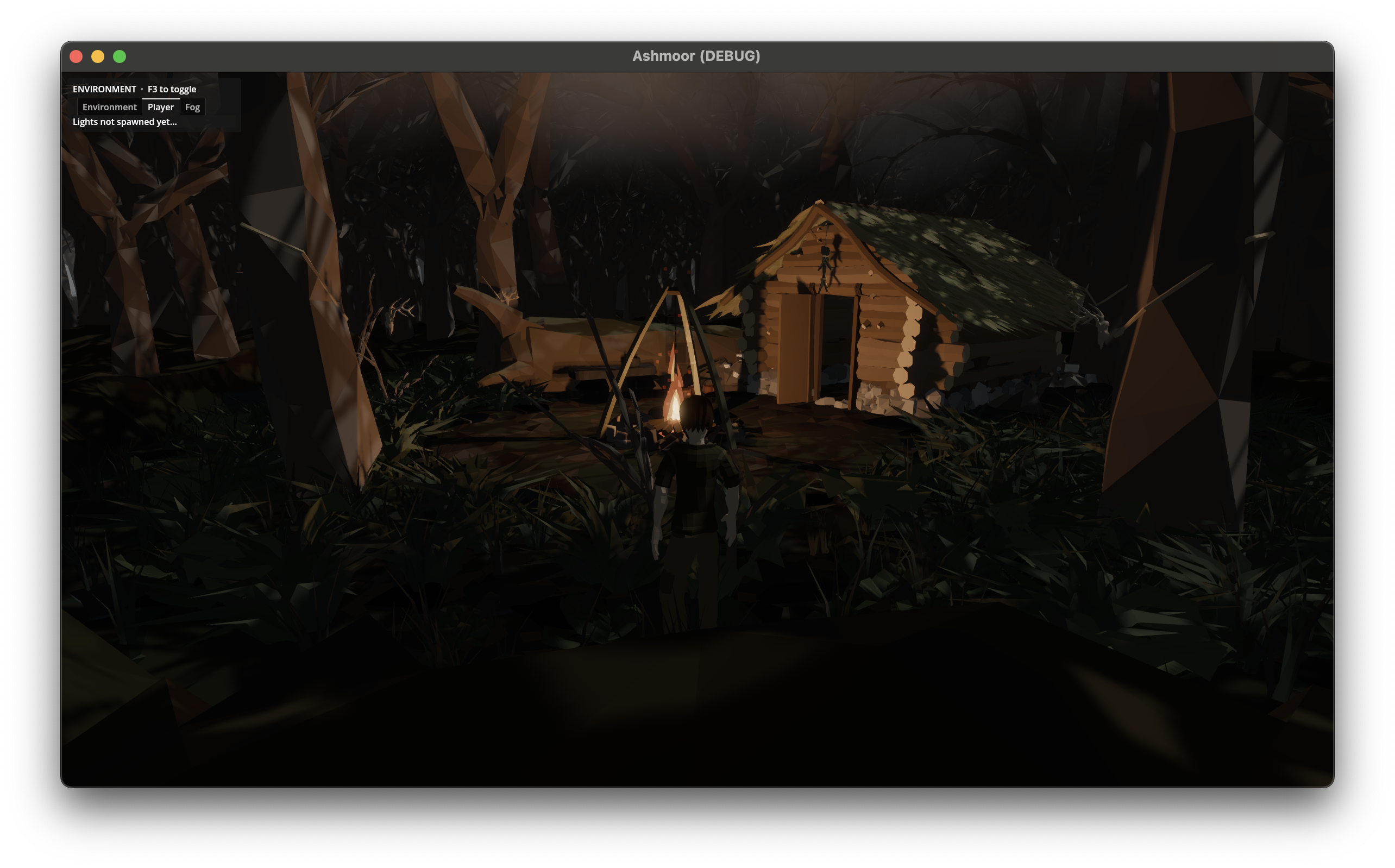
The in-engine view above closes the day. The cabin in the moor's atmosphere, the player standing at the fire pit, the trees and the scatter doing the work they were designed for. There's nothing else to add. There's nothing to take away.
That isn't the same as "finished". The setpiece still wants interaction. Sitting at the fire should mean something. The cabin should have an interior, or a reason not to. The effigy should have a story attached, even if the player only catches a fragment of it.
The look, the feel, the way the place reads when the player walks up to it: that's done. The rest is gameplay.