The smallest family in the library. Props that belong to nothing but the woodland itself. There is only one of them so far. That's by design.
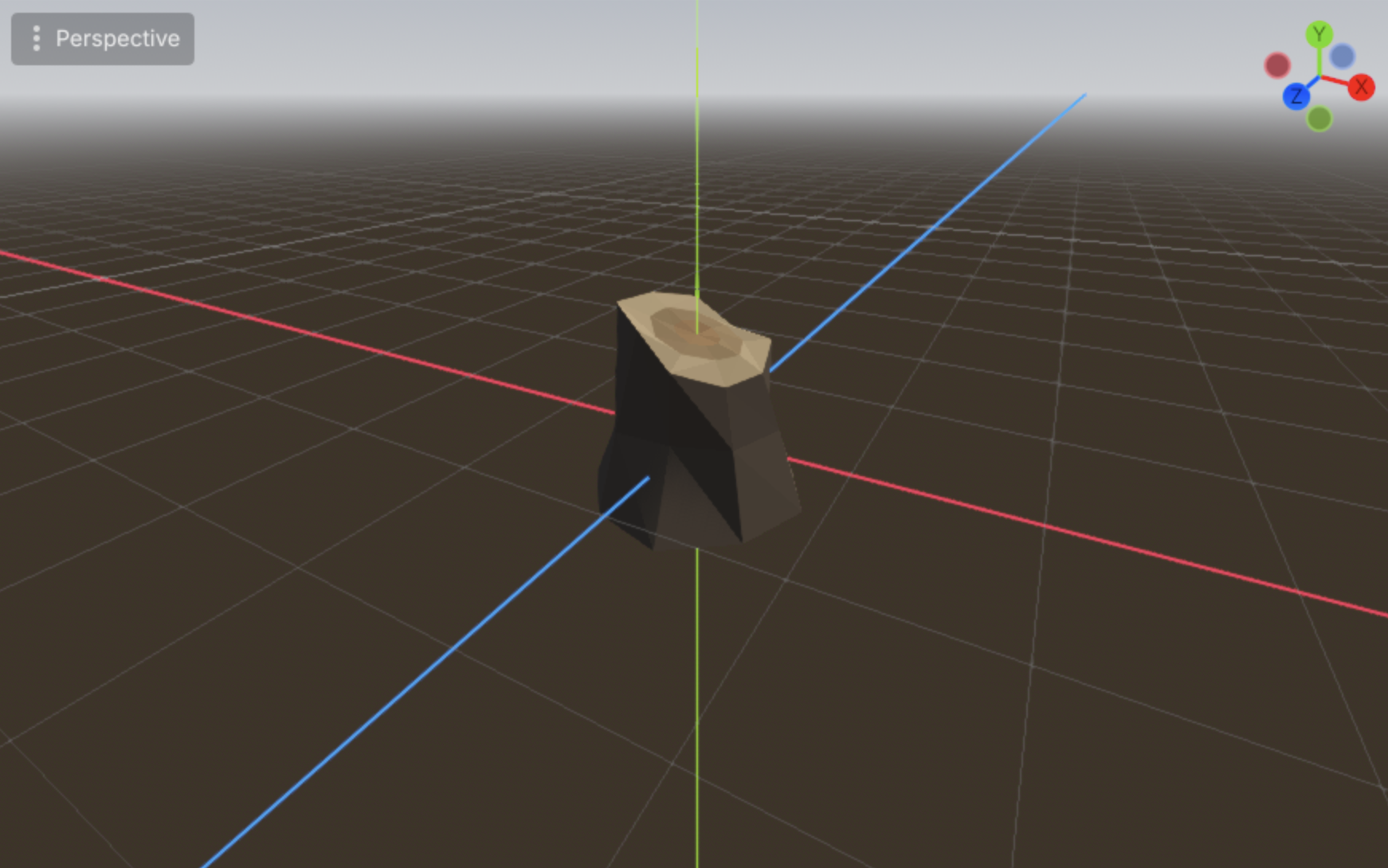
The stump is the project's first piece of biome dressing. A prop that doesn't belong to any human setpiece. It belongs to the woodland. It scatters into the same procedural layer that places trees, rocks, and ferns, at a much lower density.
The decision worth recording is the choice to leave the top of the stump without axe marks. Sawn flat, with visible rings. Axe marks would imply a person, which would imply a setpiece, which would mean the stump suddenly carries narrative weight and stops being incidental. Sawn flat, the stump reads as forest. The same way a fallen branch or a cluster of mushrooms would.
This is the biome family's whole design principle: nothing here has a story. The biome props exist to make the moor feel lived in by the moor itself. Anything that would prompt the player to ask "who did this?" belongs to a different family.
There's a longer thought attached. The moor's authority, whatever it is, has to feel prior to any of the human positions in the project. The cabin's people, the outpost's people, the chapel's people: all of them arrived to find the moor already here. The biome's props are what they found. If the player can look at a stump and read it as having been placed, then a piece of the moor's seniority has leaked away, and the three human answers start to feel like the centre of the world rather than three small responses to it. They are not the centre. The moor is the centre. The stump is what the centre looks like.
What's coming
The biome family will grow as the procedural scatter system grows. Planned, in rough order: a fallen-tree variant with roots, a mushroom cluster, a moss patch (probably a decal rather than a mesh), a small pile of fallen branches, a clump of dead bracken.
None of them will have axe marks. That's the rule.
End of week
This is the last entry of the week, and the smallest. It feels like the right note to finish on. The big things, the church, the outpost, the cabin, get the attention. The small things, like a stump, are what make those big things sit in a real place.
Looking back across the week, the three big setpieces have started to talk to each other in ways that weren't fully planned. The cabin and the church and the outpost are each a different answer to the same question, and the question is what do you do when the world stops being a place you understand? The cabin's answer is older than the question. The church's answer is older than the building. The outpost's answer is younger than its solar panel. None of them is finished. None of them is right. All three are still here, in the same moor, at the same time. The player is going to walk between them.
Next week: getting into the interiors that all these props are waiting to inhabit. And, perhaps, the first real gameplay verbs.