The unbranded props. The ones that don't belong to any setpiece in particular: barrels, boxes, fires, an iron. The connective tissue of the moor's interiors.
A general prop, in this project's discipline, is a prop that has to be readable as anyone's. The cabin's bowl belongs to the cabin's occupant. The outpost's jerry can belongs to the outpost. The church's votives belong to the church. The barrel in this folder belongs to whoever finds themselves needing a barrel. That neutrality is the family's reason for existing, and it's surprisingly hard to maintain. Every general prop has to be tested in three completely different setpieces before it can be approved. Any lean toward one of them is a failure.
The campfire
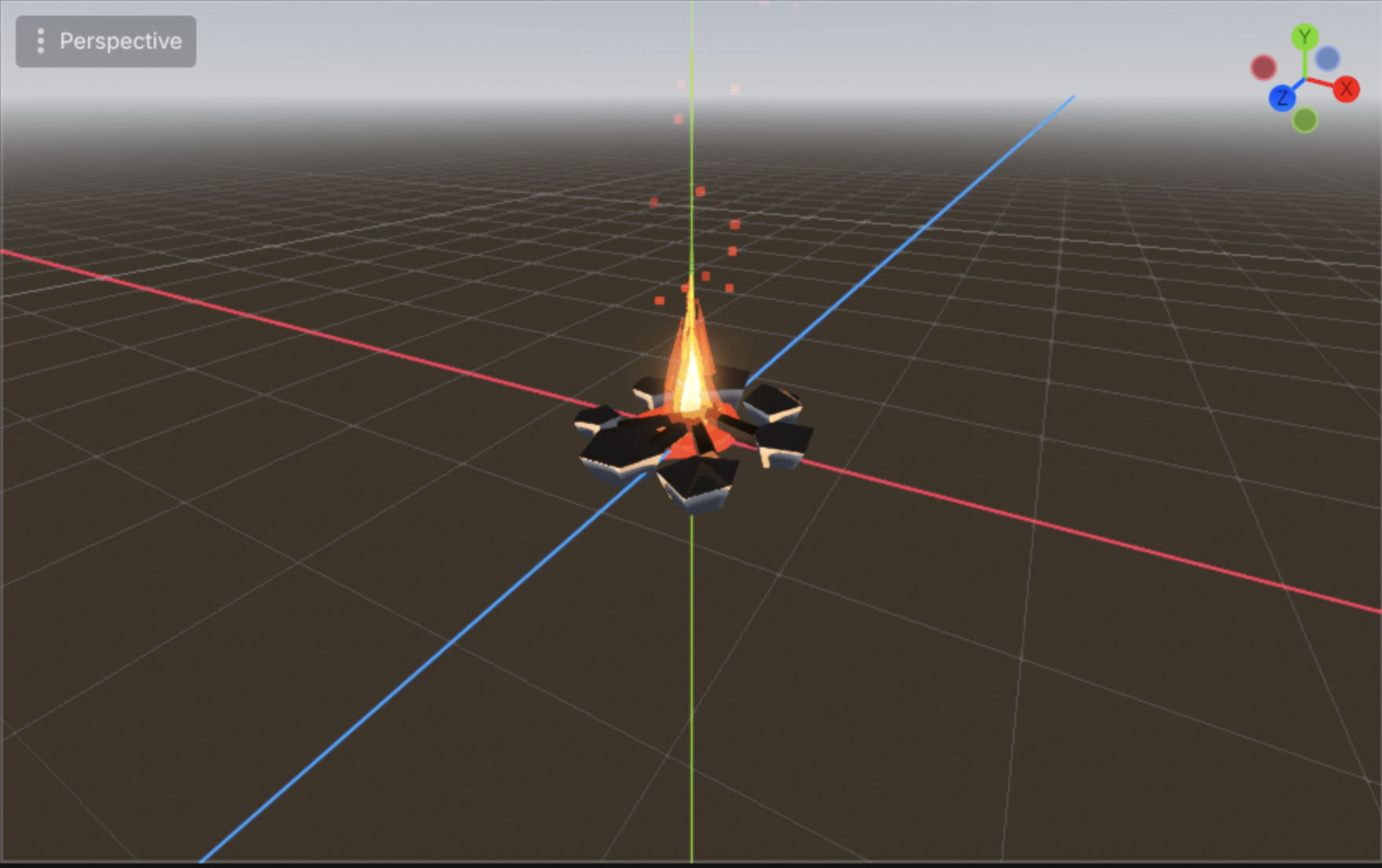
The campfire is the project's foundational prop. Every setpiece in Ashmoor has a fire at its centre, and almost every one of them reuses this exact prop: a ring of small faceted stones, three crossed logs, and the same paper-cut flame quad as the lantern and the votives.
The single-source-of-truth discipline pays for itself here. The cabin's cooking tripod is this campfire with a tripod prop above it. The chapel's votive rack is this campfire's flame at 1/10 scale. The lantern is this flame in a glass case. Every warm point in the moor is one of two or three identical flame quads.
There's also a thematic case for the consolidation, which is that fire is the element shared between every kind of mind in the project. The cabin's fire is communion. The chapel's votives are devotion. The outpost's floodlights are demarcation. The lantern is navigation. Different intentions, identical underlying object. Whatever each setpiece's people thought they were doing, all of them had to start by lighting something.
The barrel
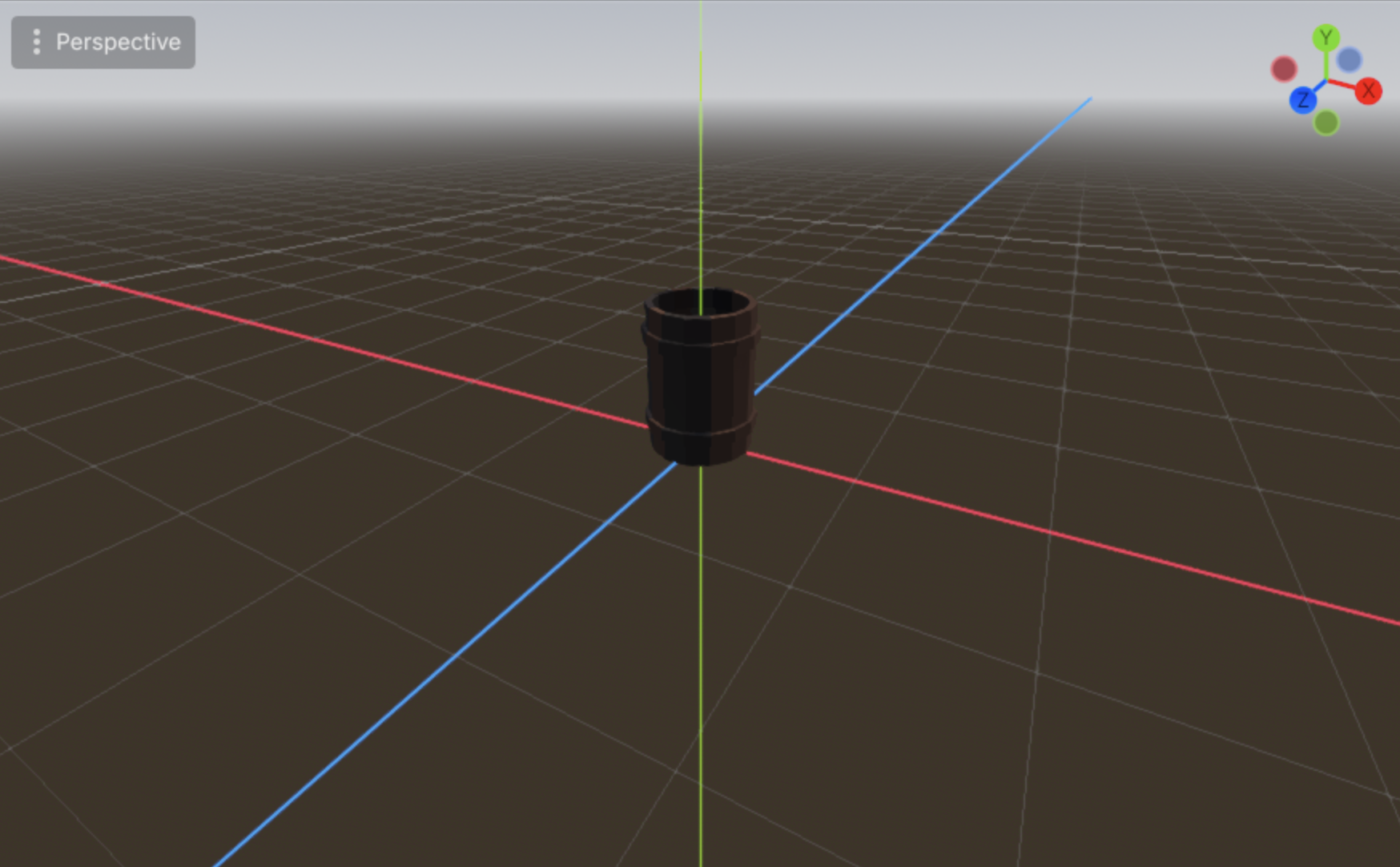
The barrel is the moor's universal "this is a place where humans worked" indicator. It works equally well outside the cabin, behind the farm tractor, or stacked against an outpost module. The colour is intentionally faded so it doesn't anchor itself to any setpiece's palette.
The hoops are separate geometry from the boards, which means variant barrels can come out of swapping board colours and reusing the hoop mesh. Sun-bleached. Soot-blackened. Painted. Single source, many readings.
The box
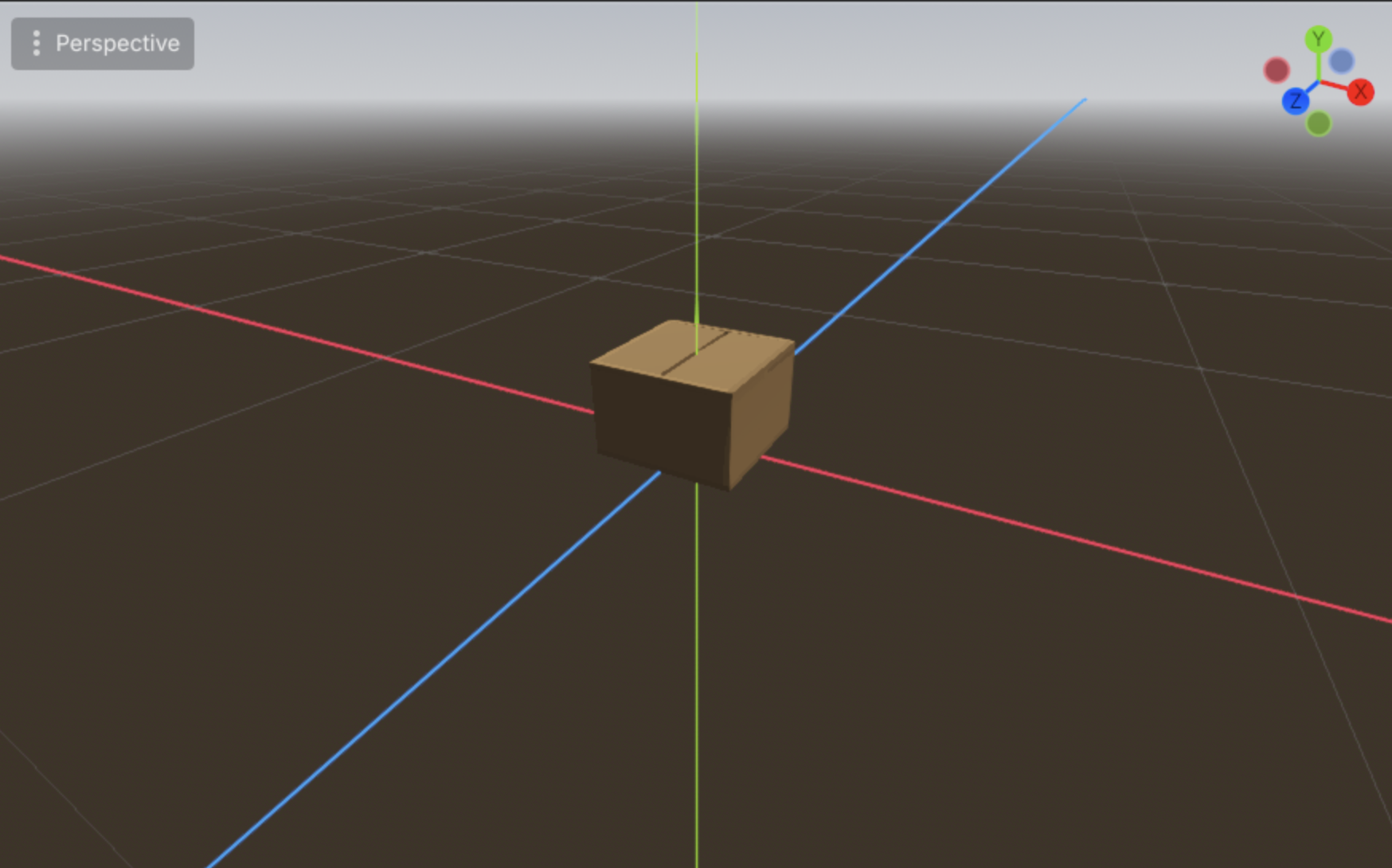
The box is the barrel's cousin. Where the barrel says "this place had liquids", the box says "this place had cargo". The lid is modelled slightly ajar by default. The player can see something is inside, but not what. That's the prop's whole job.
When inventory and pickup land, the box becomes the project's first lootable container. Until then, it's set dressing that hints at the system that's coming. There's a small honesty in that. The moor isn't ready to give the player anything yet, and it's already making the gesture of holding things.
The iron
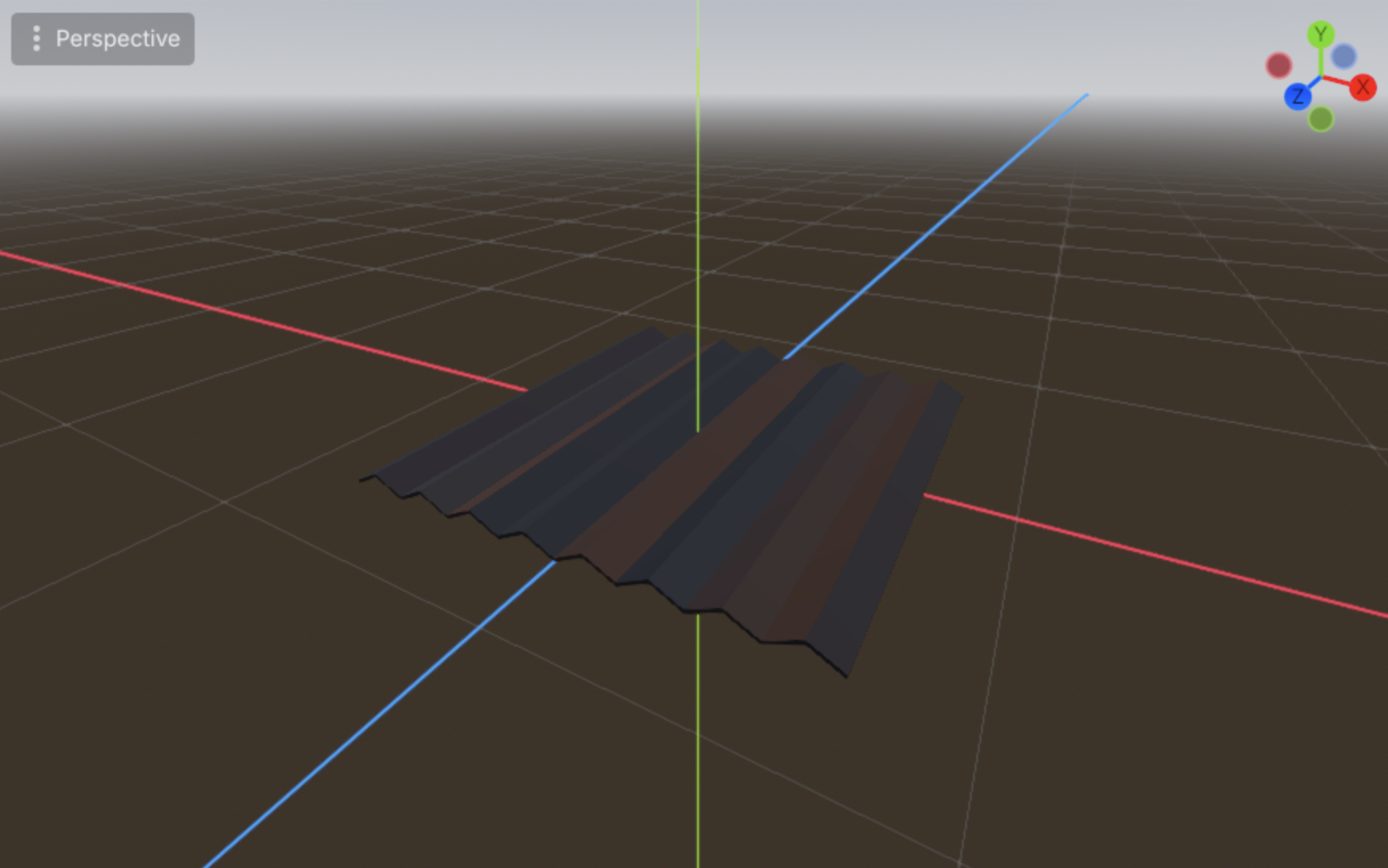
The iron is the prop most outside its family. A small piece of domestic detail, the kind of object the player walks up to and registers: someone used to live here, and they had things, and the things are still here.
That sentence is the entire emotional brief for the general-props family. The cabin, the church, the outpost all three make claims about what the moor is for. The iron makes no claim at all. The iron just remembers that, before any of those claims, someone was pressing the wrinkles out of a shirt on a Sunday morning. Every general prop is trying to be a small piece of that memory.
The iron will eventually go into the cabin's interior. Never on a table. On the cold stove. Forgotten there. Heavy enough that you have to be deliberate about wanting to use it.