The small things that make a clearing read as made by someone. The cabin's prop family is the project's most heavily-loaded library. Every object here has to tell you something about whoever lives in that cabin, and whoever lives in that cabin has thoughts about the moor that the moor takes seriously.
A constraint up front. The challenge with this prop family, more than any other in the project, is restraint. The aesthetic of antler, bone, skull, stake and hide is one rock band away from cliché. Every prop in this folder has to earn its place by being specific rather than atmospheric. The skull is for a torch. The torch is at the edge of a clearing. The clearing is where the cabin's occupant does something. Any prop in this family that reads as generic horror dressing is a broken prop. The cabin doesn't dress. It furnishes.
The skull torch
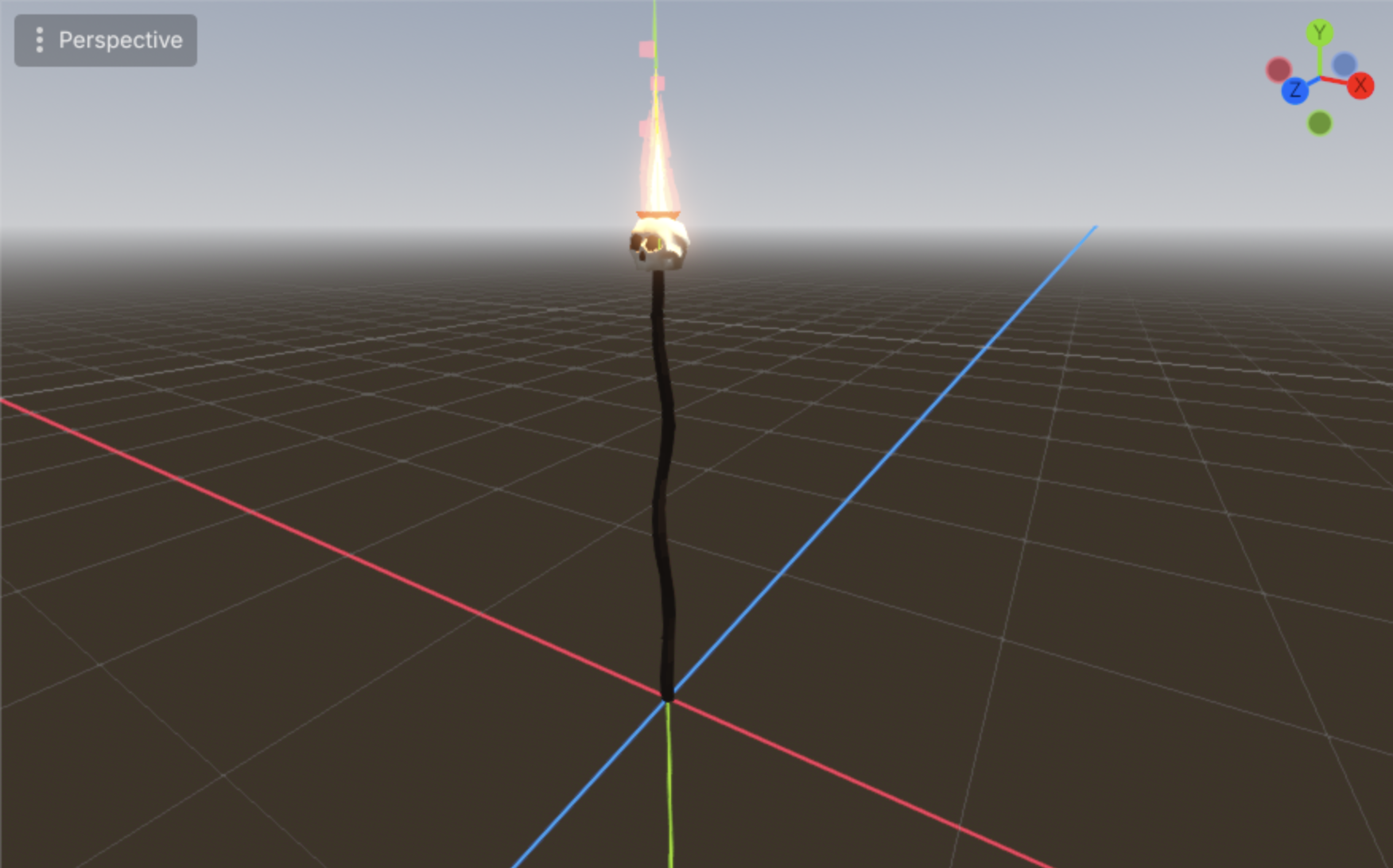
The skull torch lives at the edge of any clearing the player should be afraid to enter. A wooden stake, a hollowed skull mounted on top, a flame burning inside. The flame doubles as a light source: the same paper-cut quad used by the lantern and the campfire, lit by a single low-temperature point light.
A skull torch is neither a trophy nor a threat. The cabin's occupant doesn't display these to scare visitors away. They place them because a lit flame inside a skull is what a perimeter looks like to them. The light is for the moor. The player just happens to be reading someone else's language.
The skull
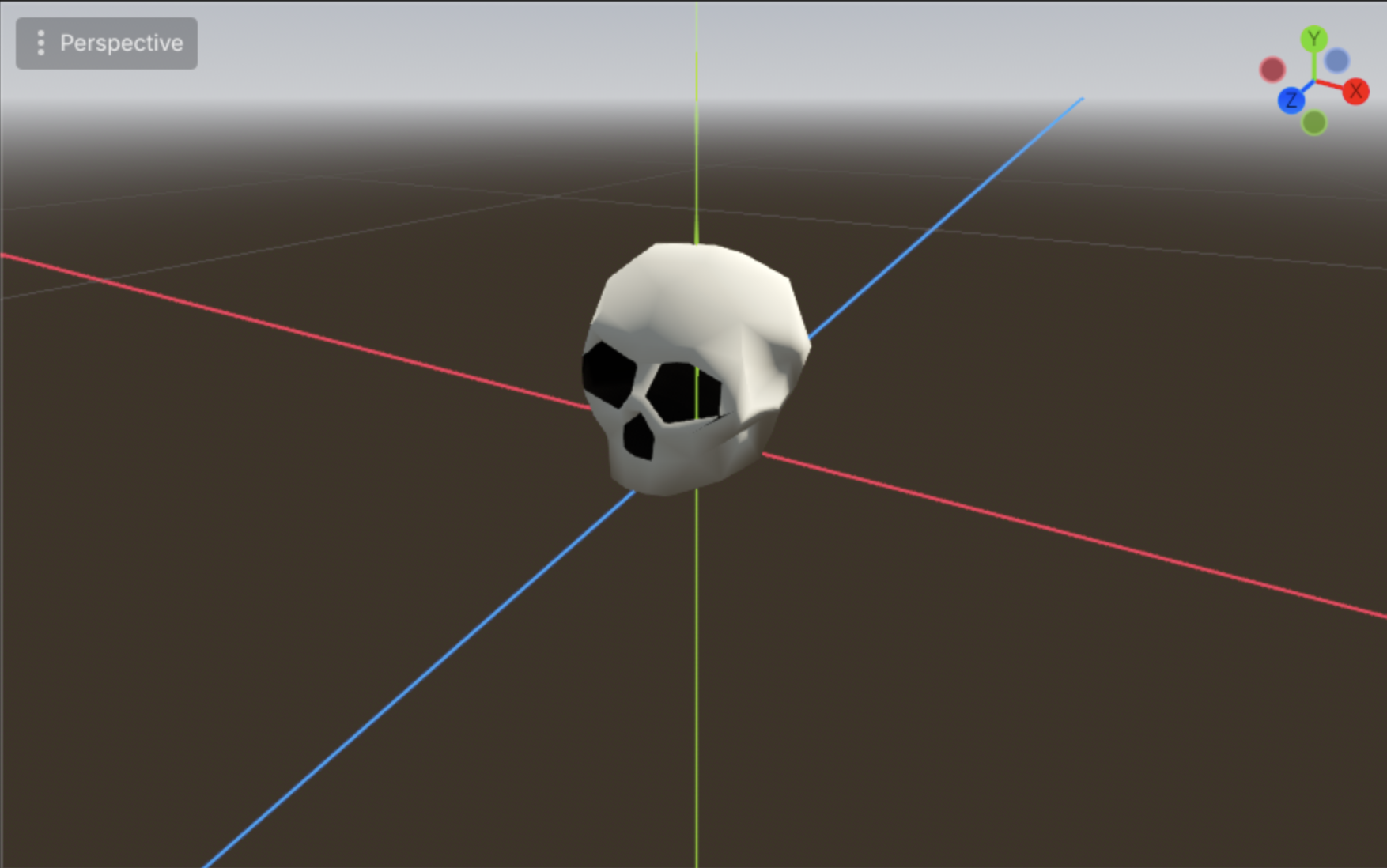
The skull on its own. It exists primarily so the skull-torch can reuse it as a single source of truth. The torch is the skull plus the stake, rather than a redrawn variant. The skull will also appear as a low-density scatter element inside the cabin's clearing, half-buried, never as a placed hero prop. Skulls in this family are background. They are never events. That distinction is most of the family's whole tone.
The stone table
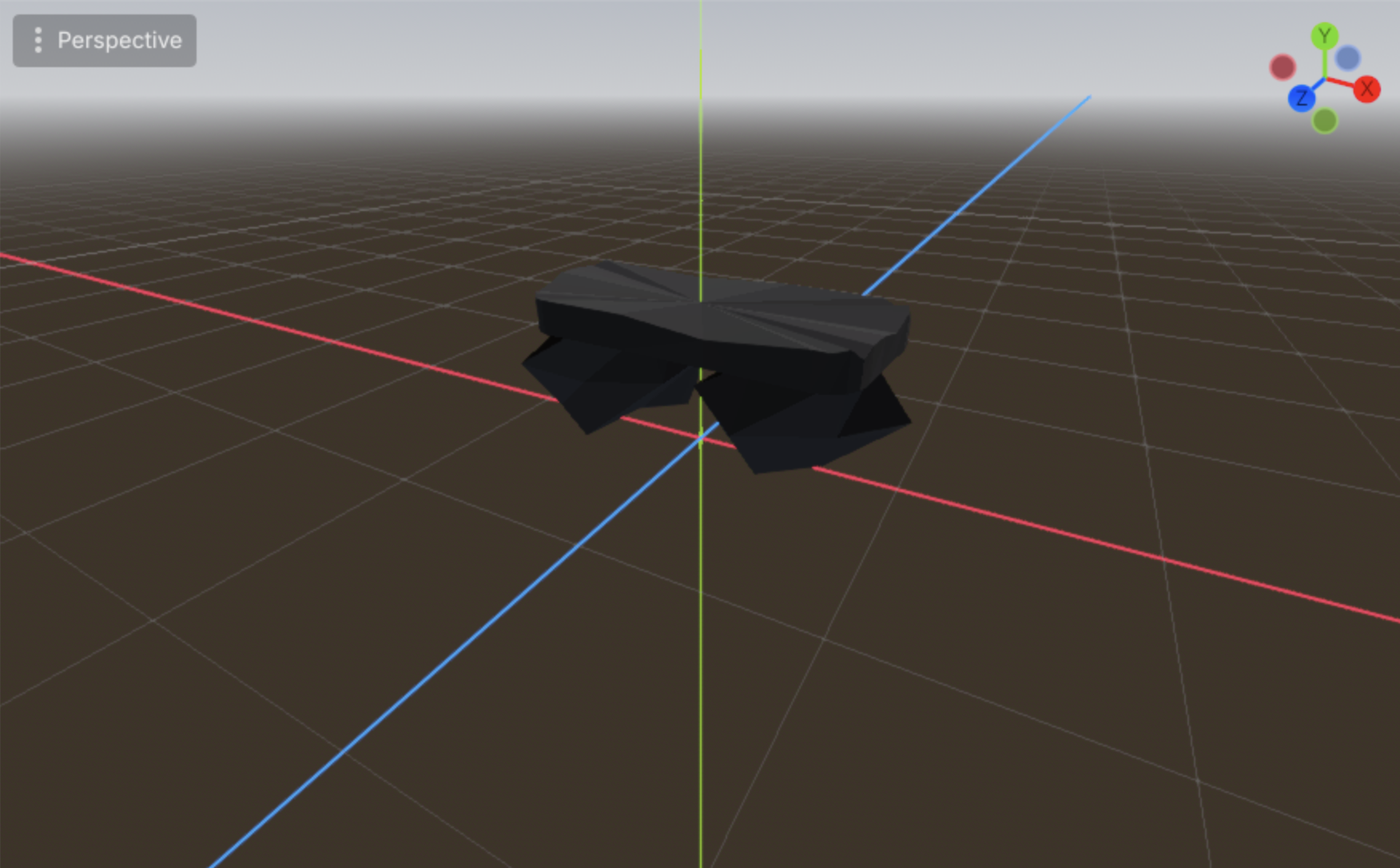
The stone table is the altar prop generalised. The altar setpiece uses the small variant. The cabin clearing uses this larger one as a work surface. It's the kind of prop that gets covered in bowls and skulls and mortars, the things below.
What the stone table conveys is that the cabin's occupant works. Not a hermit, not a mystic, not a recluse with a beard. They have a workshop, and the workshop happens to be outdoors, and the things they make are not for sale. A scientist has a lab. A priest has an altar. The cabin's occupant has a table, on which the lab and the altar are the same surface.
The mortar and pestle
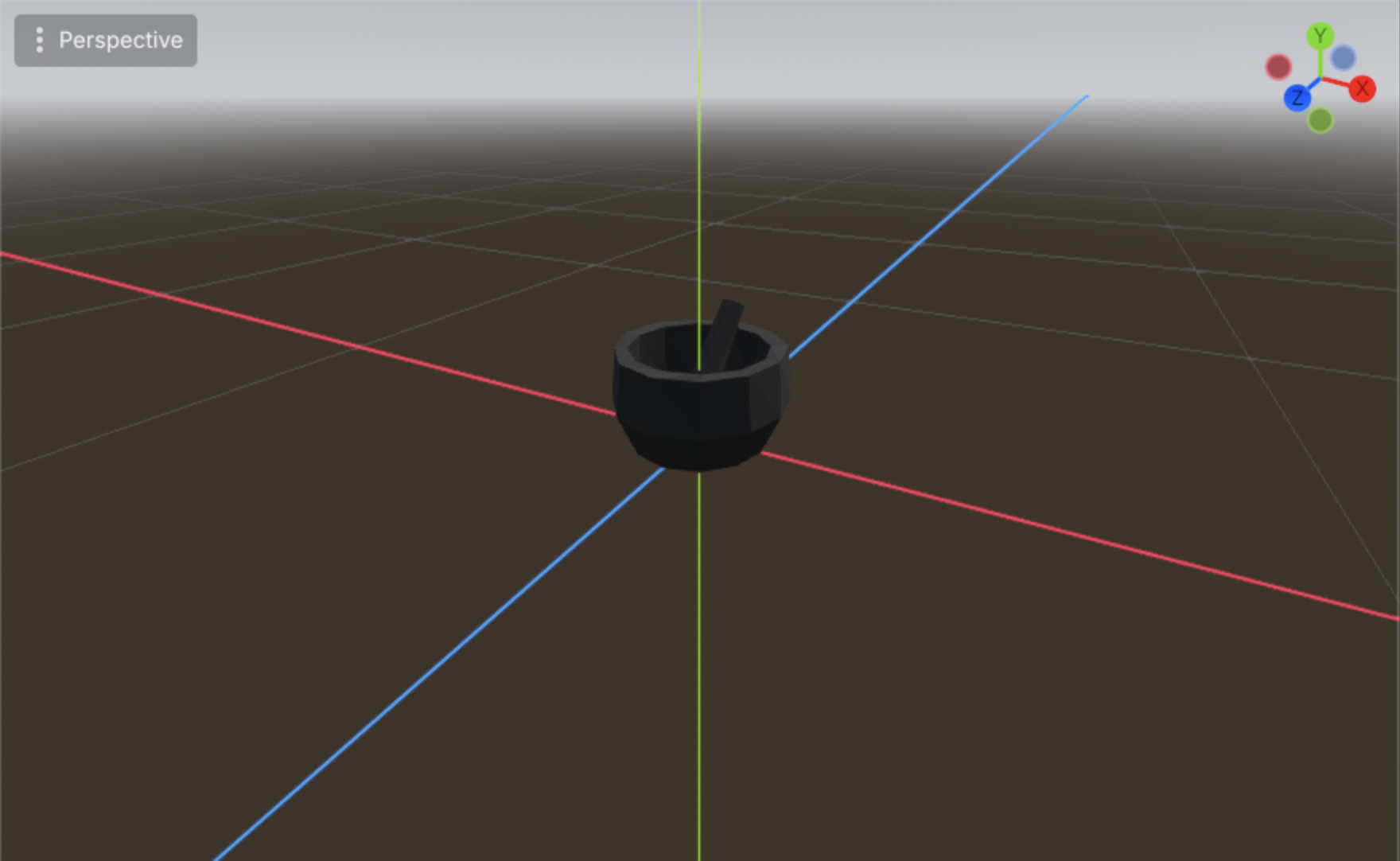
The mortar and pestle is the project's first proper diegetic detail prop, the kind of thing the player will lean over to look at without picking up. It lives on the stone table. The implication is that something has been ground here recently, and you don't want to know what.
There's an entire later mechanic this prop is quietly waiting for, and the entry won't say more about it than this: every object in this family has a job in the late game, and the mortar's job is the most consequential of any prop the cabin owns. The entry will come back to it.
The bowl
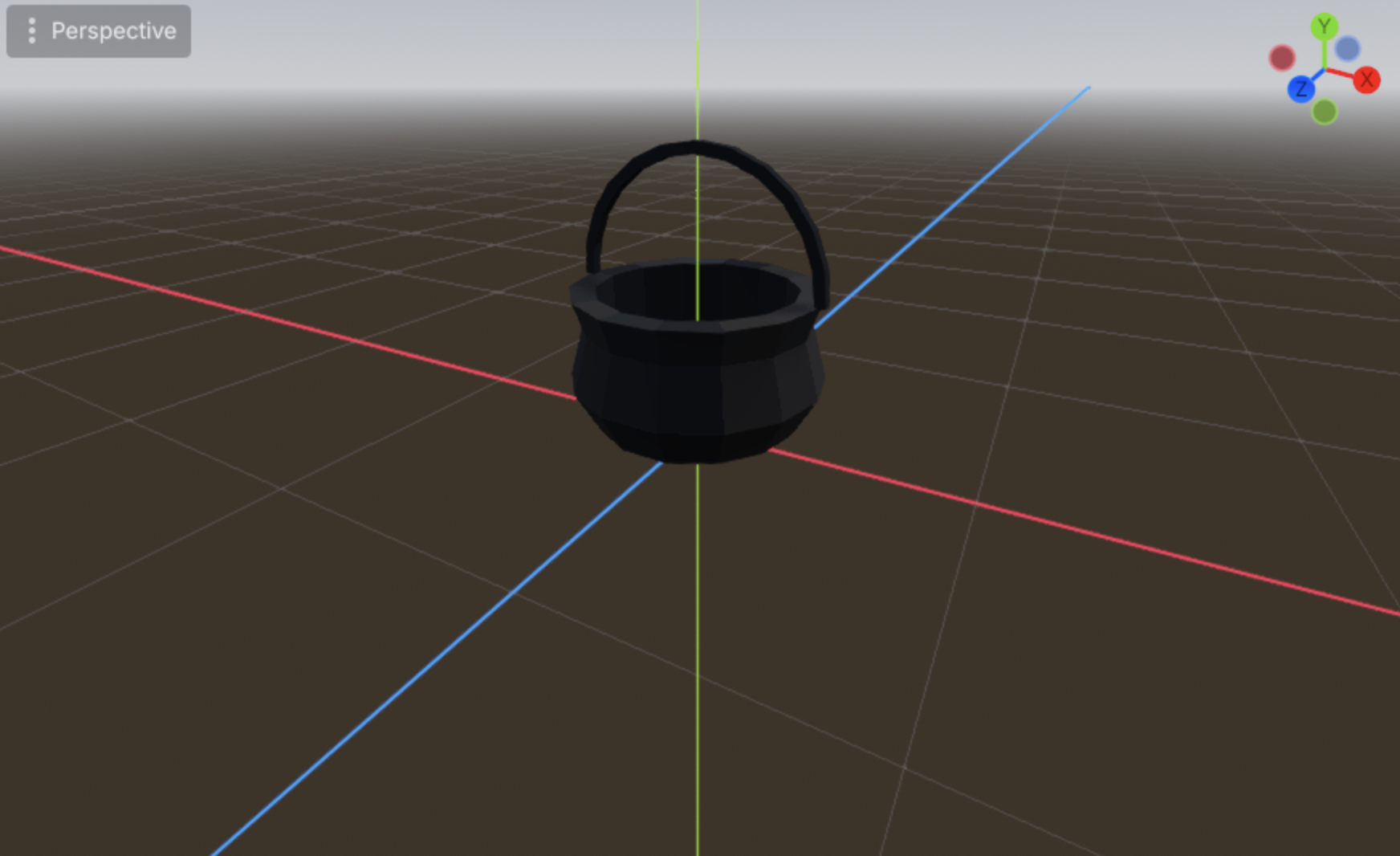
The bowl is another stone-table prop. Deliberately ambiguous in scale. Small enough to be ceremonial, big enough to hold a head. The interior carries the darkest material in the family, which makes the bowl read as a small black hole on the table when the player walks past it. That's the point.
The ambiguity is the point at a higher level, too. Every prop in this family has to remain readable as either practical or ceremonial depending on what the player has come to believe about the cabin's occupant. A bowl is a bowl when you're suspicious. A bowl is a vessel when you're sympathetic. Same mesh. Different reader.
The scarecrow
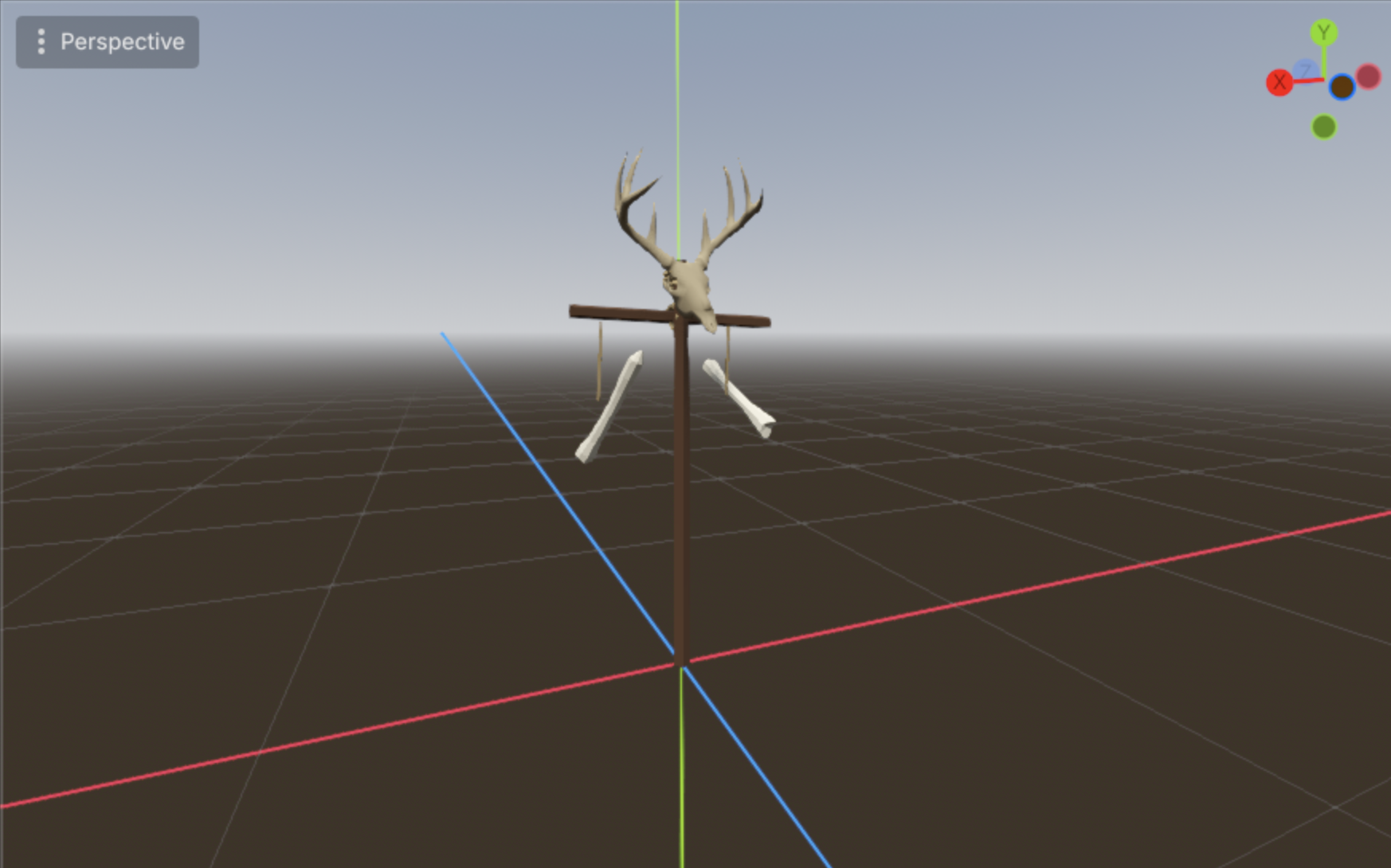
The scarecrow is the long-distance silhouette prop in this family. Unlike the skull torch, which is a close-enough-to-be-scared-by object, the scarecrow is meant to be seen across a field. Its silhouette has to read at 60+ metres through fog. The poly count is low for exactly this reason. Distance is its job.
It will get used sparingly. One scarecrow at a field edge is a setpiece. Three is a forest of them, and that's a different game. The cabin's occupant doesn't seed scarecrows the way an institution seeds fenceposts. They put one where one is needed, and never two where one would do. That economy is half of what makes the family feel coherent.