The things inside the prefabricated modules. Where the cabin's props imply ritual, the outpost's props imply procedure. They were left mid-shift by people who expected to come back.
The whole family has a single design constraint. Nothing in it can be more than fifteen years old. Where the cabin's props have time wound into them, and the church's props have centuries of inherited symbol, the outpost's props are recent. They were bought from a catalogue. They were shipped here on a truck. They were unboxed and assembled and switched on, and most of them still work, and that's part of what's wrong.
The solar panel
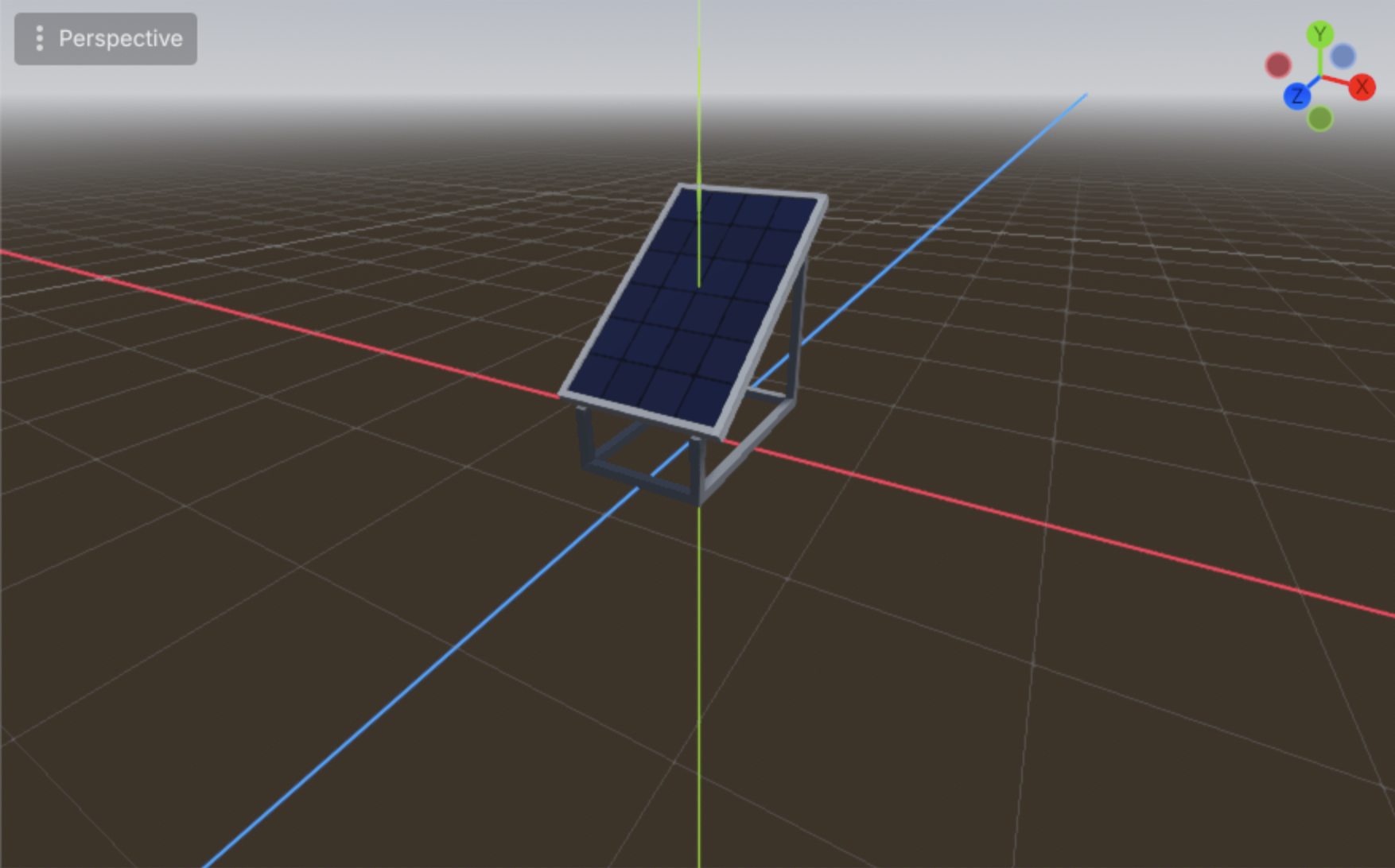
The solar panel is the outpost's life-support prop. It's why some of the floodlights still flicker on at dusk. It's why a single weather-station LED is still blinking. The panel itself is a small steel frame and a dark glass face. Low-poly, no animation. The implication is that the panel is the only thing in the camp that hasn't been abandoned by maintenance.
It's also the prop in this family that the moor has the most opinions about. A panel pointed at the sky in a place where the sky is increasingly wrong has a different job description than the manufacturer expected. The panel keeps producing voltage. The voltage keeps powering instruments. The instruments keep recording readings. Nobody is here to read the readings. The system functions perfectly, in the absence of anyone who knows what for.
The weather station
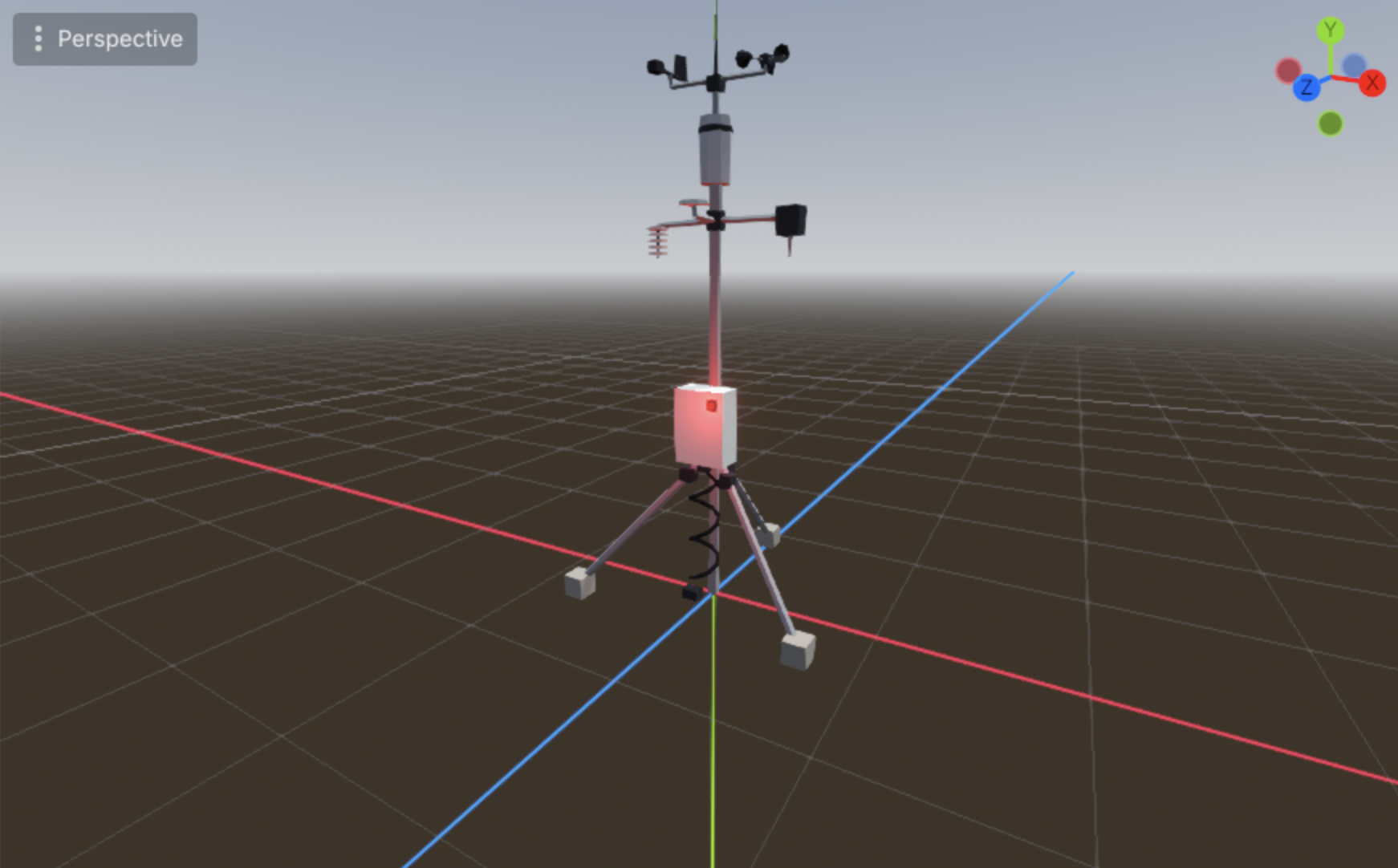
The weather station is the camp's piece of ambient motion. The anemometer cups spin slowly on a driven rotation. The vane swings on a stochastic timer. Together they tell the player that something here is still alive, even if it's only the wind being measured.
The trick is the same one the mist-wave drift uses. Motion so quiet you don't see it, where the absence of it would feel wrong. The difference between the two motions matters. The mist's motion belongs to the moor. The weather station's motion belongs to the camp. The moor moves because it is. The camp moves because someone built a thing that moves. Two different reasons for the same low-frequency life.
The jerry can
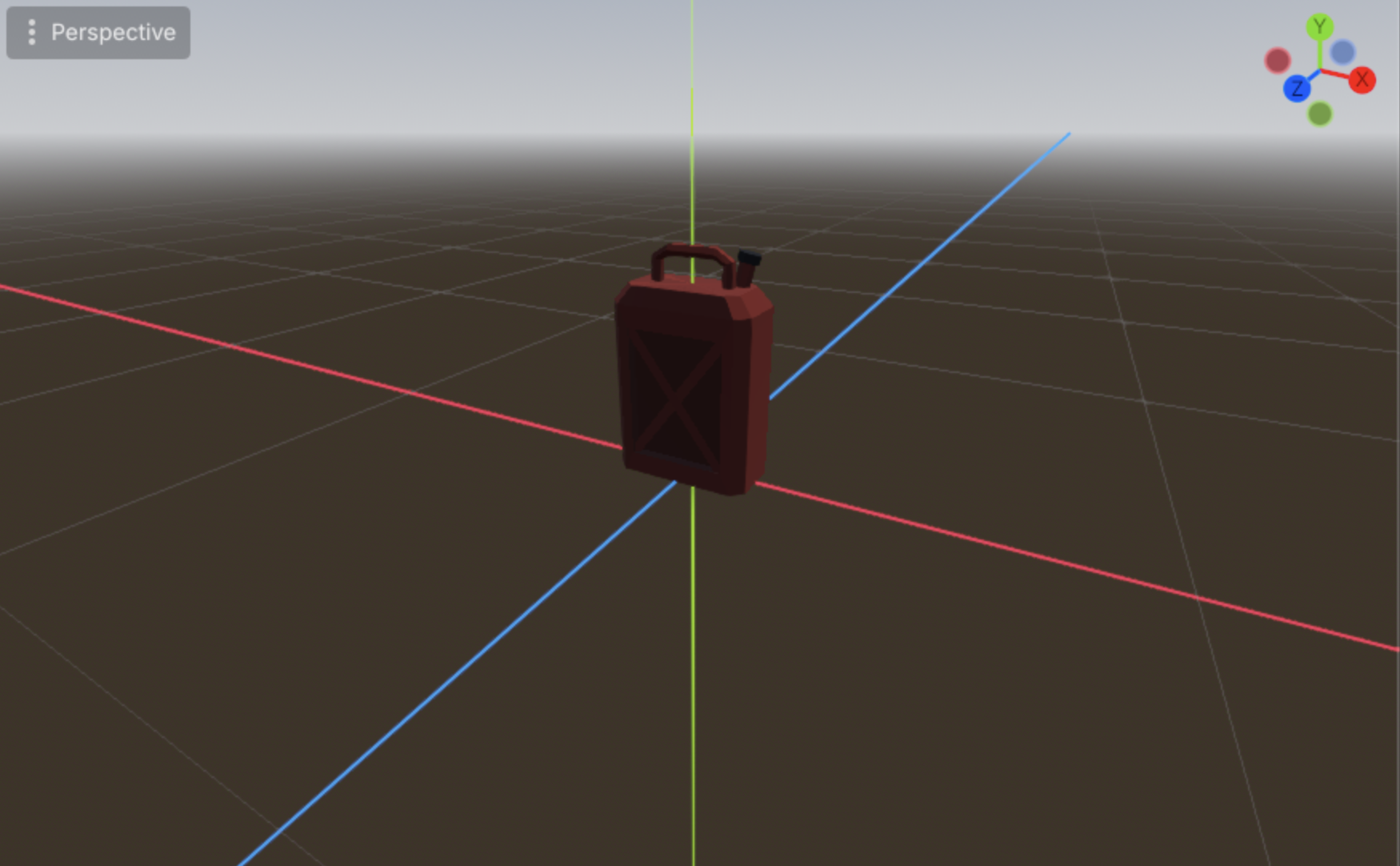
The jerry can is the outpost's "fuel" prop. It'll be findable, pickup-able, and the project's first piece of meaningful consumable interaction once the inventory system lands. For now it's a piece of dressing. A single dented can leaning against the side of a module, painted in the camp's faded olive.
The thematic line running through this prop is short. The camp's occupants believed in fuel, in the same way the cabin's occupant believes in fire. Both are about heat, light, the extension of human capability into the dark. The difference is that fuel runs out and the cabin's fire is a fire whether or not anyone is feeding it tonight. The jerry can is the camp's whole philosophy in one container: the world is a problem to be metered. The cabin's fire is the other philosophy, and that fire is in a different folder.
The chair
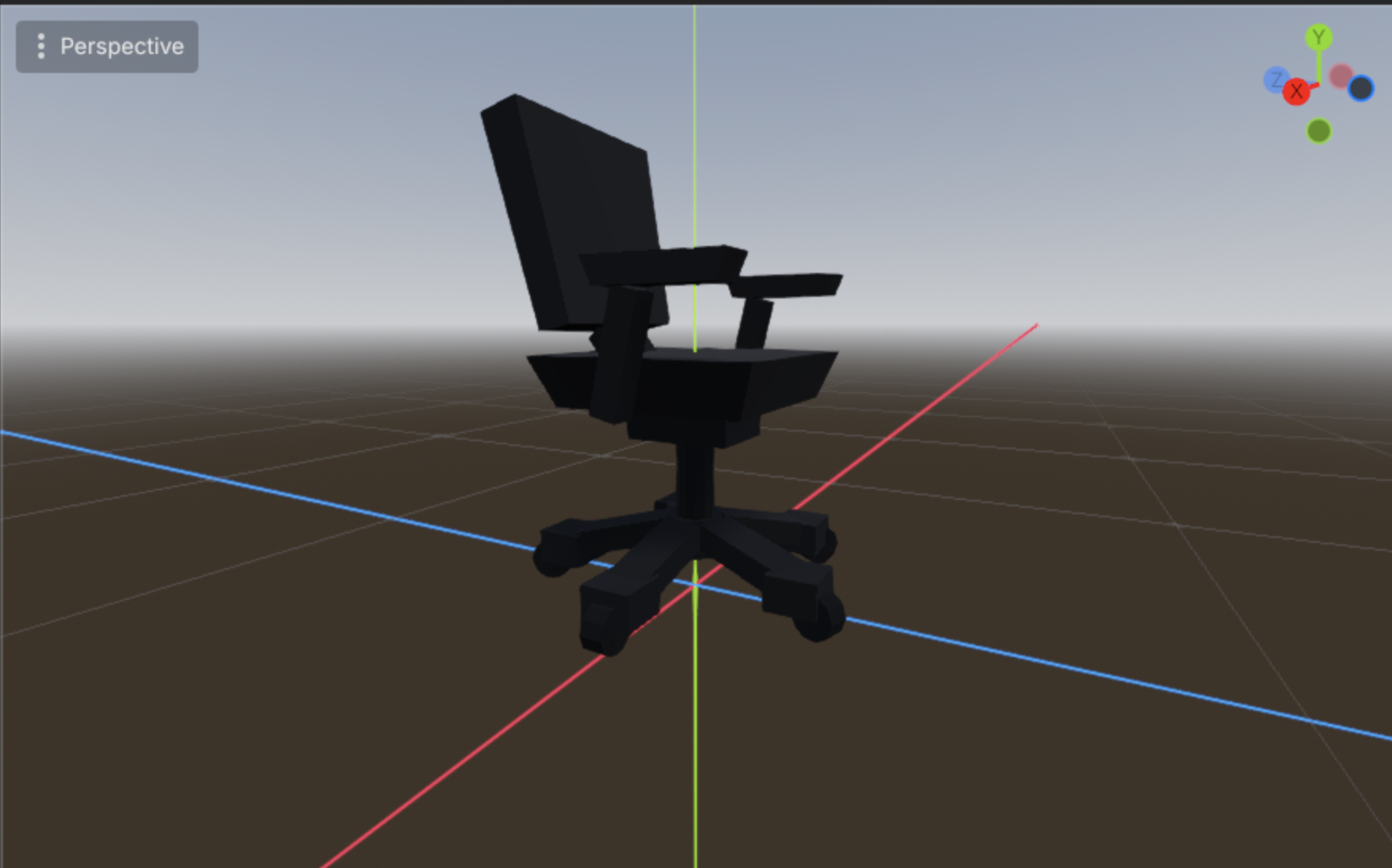
And finally the chair. A folding metal chair, the kind every field camp uses. The chair exists for one specific composition: pulled up to the weather station, facing the spinning anemometer, with no one sitting in it.
That arrangement is the entire outpost story in one frame. Something was here. Something was watching the wind. Something isn't here anymore. The chair is the only prop in the family that has a posture: a forward lean, an angle, an implied gaze. Everything else in the camp is equipment. The chair is the place where a person was. The fact that the person isn't there now, and that the chair still points at what they were watching, is the camp's load-bearing image. If the player walks past that arrangement and doesn't slow down, the project has built something else.