The objects that will furnish the church's interior, eventually. Each one is the kind of prop the player walks up to slowly, because it has already been waiting for a long time.
The constraint on this family is the opposite of the outpost's. The outpost's props are recent. The church's props are inherited. They belong to a tradition that didn't start in Ashmoor and won't end with it. The chapel will outlast the moor regardless of what the moor does, because the things inside it have already outlasted a thousand smaller emergencies elsewhere. That confidence is what gives the church its tone. It is the only place in the project that does not seem afraid.
The altar
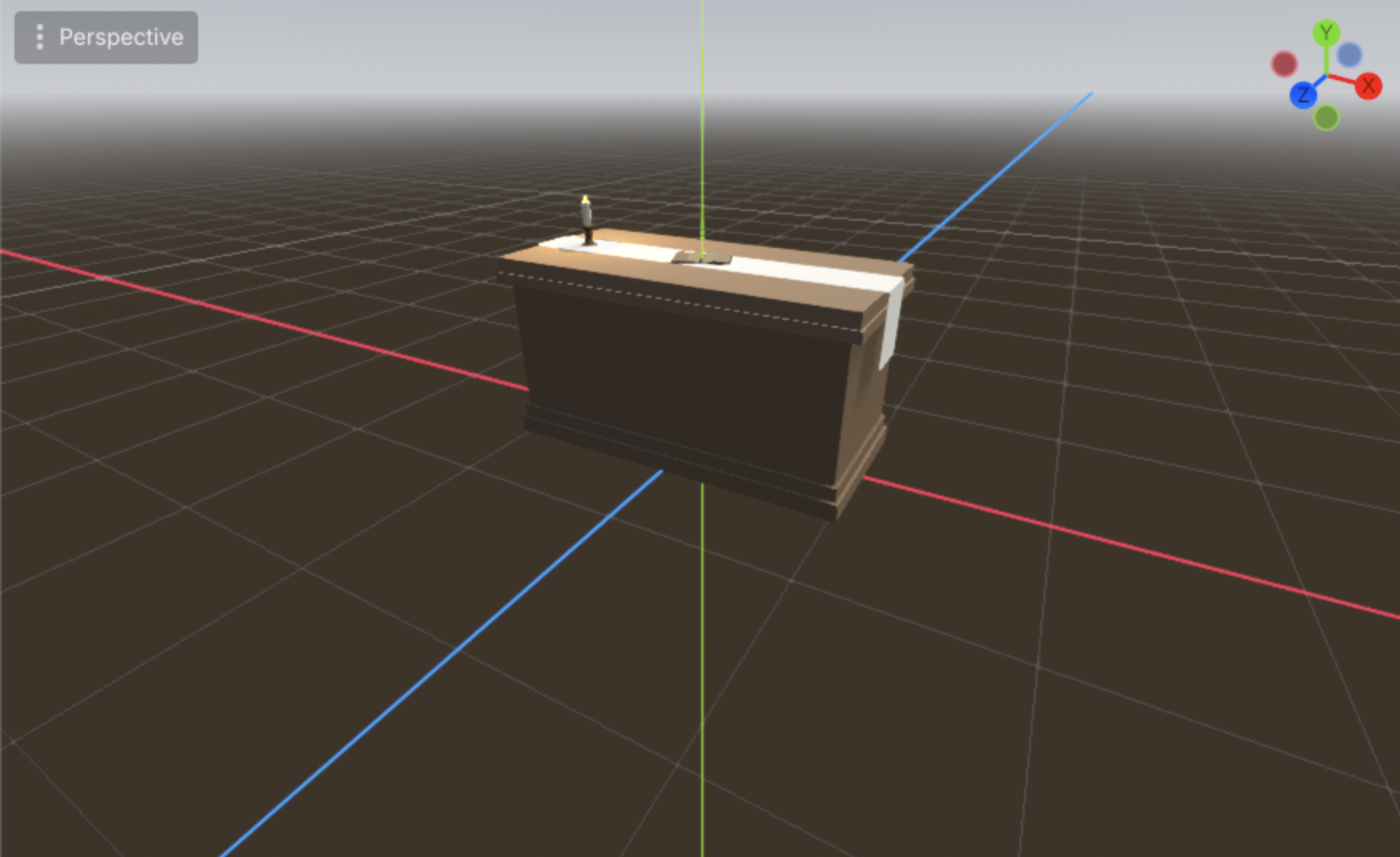
The church altar is deliberately the opposite of the altar from earlier in the week. The older altar is a rough stone block at the centre of a ring. This one is a finished rectangular block of dressed stone, the size of a small table, with chamfered edges. It implies a builder, a quarry, a community.
It also uses the same compositional trick as the older altar, one subject centred and lit from above, with completely different connotations. Same grammar, different language. The older altar's centre is consecrated by the ring around it. The church's altar is consecrated by the building around it. One arrangement was made by the people who placed the candles. The other was made by the people who commissioned the building four hundred years ago. Authority by neighbour, against authority by inheritance.
The player is supposed to feel both of these as legitimate. Neither is wrong. They are different answers to the same question, asked by different kinds of mind.
The bell
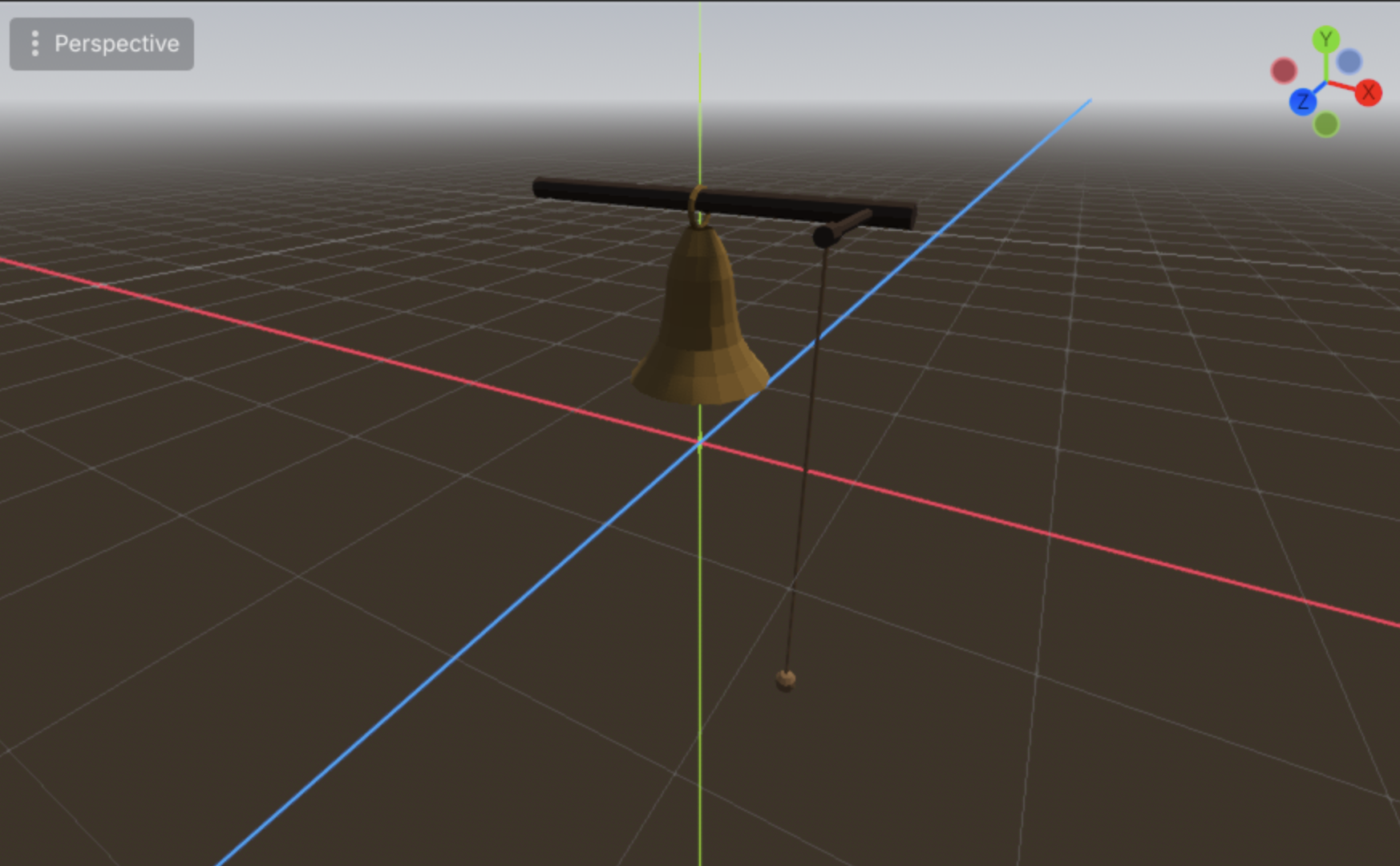
The bell is technically a roof prop, rather than an interior one. It lives in the steeple, visible from outside through the louvers. It doesn't need to ring, and probably won't, because a moor where a church bell rings is a different moor. The silhouette has to be there. A church without a bell in its steeple is a barn with a cross.
There's a thematic case for the silent bell, too. The bell was the village's announcement instrument. It marked the hours, called the congregation, warned of fires. None of those functions apply here anymore. No village. No congregation. Nothing the bell could be rung in time to prevent. So the bell stays where it is, in its yoke, silent. Its silence is the only honest sound the building has left to make.
The book
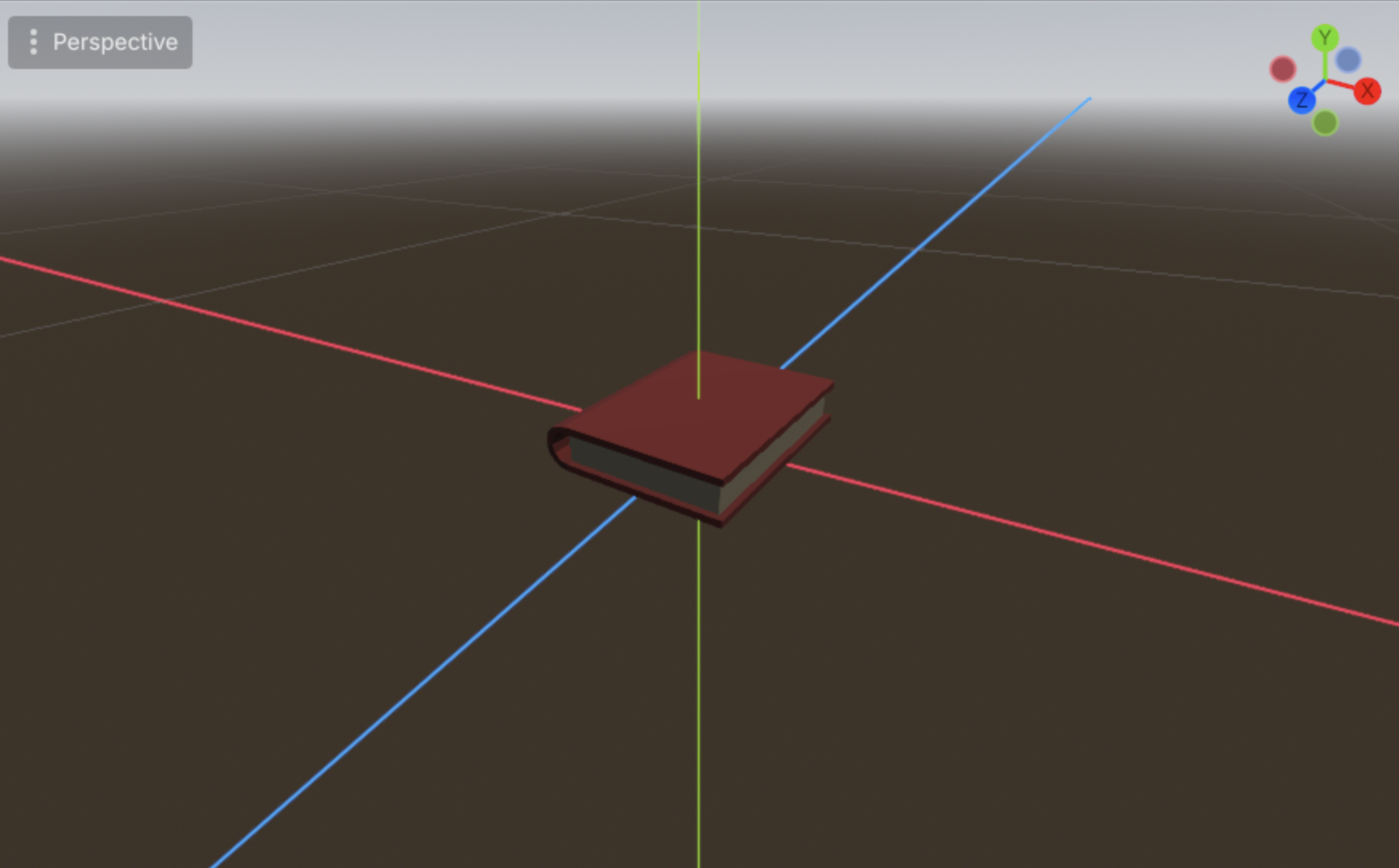
The book is a hand-modelled bible: open, on a stand, at the altar's edge. The pages are a cream vertex colour. The "text" is darker linework painted into the vertex colours rather than a texture, so it survives the faceted style without breaking the project's no-texture-detail rule.
The book is also the prop most likely to be the player's first piece of narrative in the church. You walk up, you lean over, you see what page it's open to. The "page" itself is a swappable mesh variant. Same prop, different content, deterministic per save. Whoever last read this book left it open to a particular place, and that place is going to be a piece of evidence about who they were and how they were holding up. The care here is important. The book has to be readable as a person's posture, rather than as a developer's exposition. The page that's open is the page the priest stopped reading on. That's a different kind of statement than the page the player needs to find next.
The votive
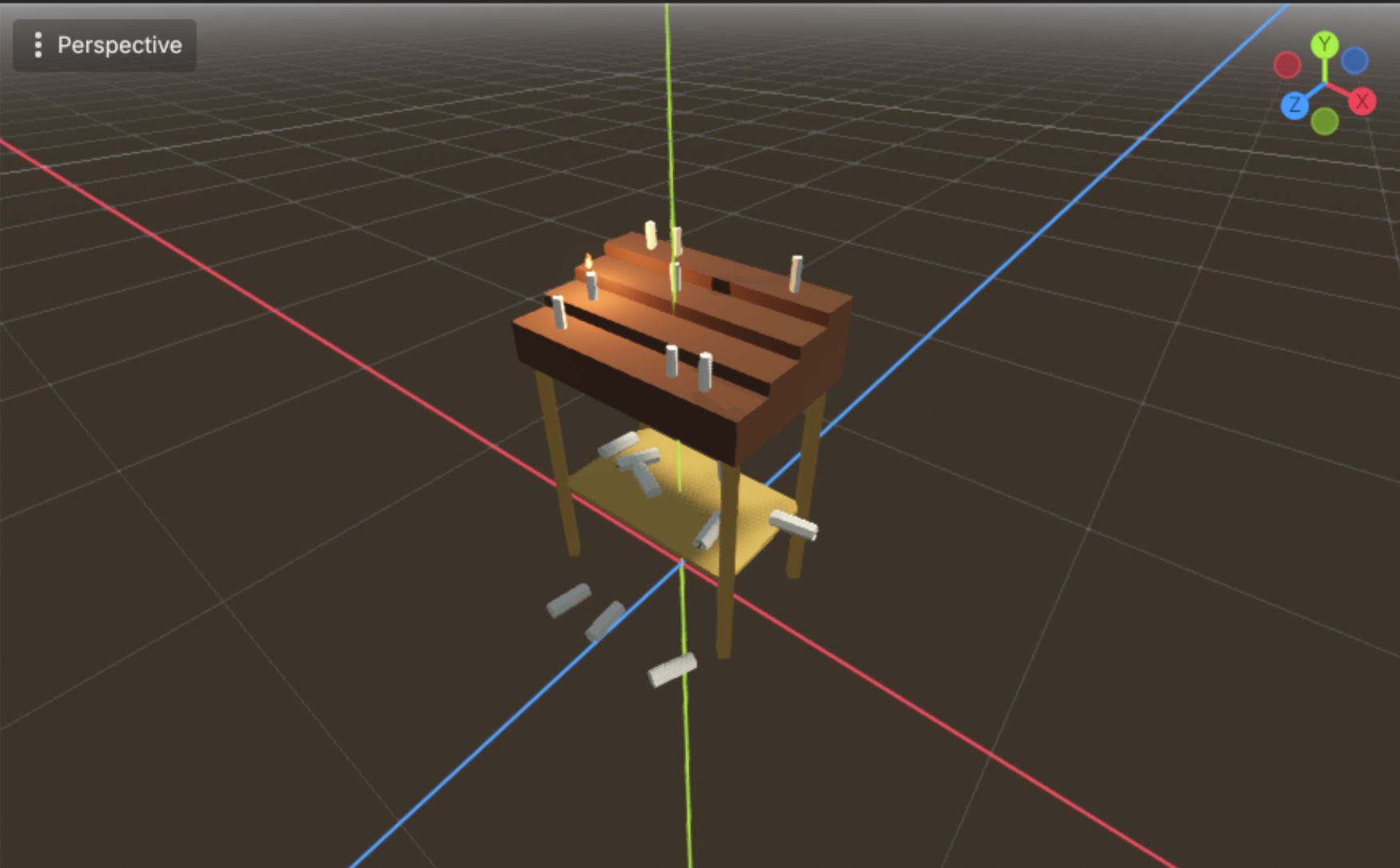
The votives are the church's one allowance of warm colour. Red glass holders, small flames inside, lined up on a metal rack at the front. Each candle is the same prop the older altar setpiece uses, with a different holder swapped in via the project's prop-variant pattern.
The point of the votives is to give the church one piece of activity. The bell doesn't ring. The book doesn't turn its pages. The altar doesn't move. The votives flicker. They're the only thing in the building that says someone was here recently.
The "recently" matters. The church wants to read as a place that has been continuously tended. The distinction matters: tended is something quieter than maintained, and softer than restored. Someone is lighting these candles. Not on a schedule, and not for a service. Lighting them is how this person responds to the building still being here. The number of lit votives will vary across save states, and the variance will mean things. This entry isn't where that mechanic lives. This entry is the prop, the mesh, the rack, and the implication.