The two largest props in the library so far. They don't belong to any single setpiece. They're the things that mark a place as used to be working.
The farm props are the project's first piece of unaligned set dressing. The cabin's props say one thing about the moor. The outpost's props say another. The church's props say a third. The farm props don't take a side. They're what was here before any of those three positions arose: agriculture, the unceremonial daily work of growing food on land that more or less cooperates. That cooperation has ended. The props remain.
This matters, because the farm is the project's reminder that whatever is happening in the moor now is happening to a place where ordinary life used to occur. The moor isn't a fantasy region. People raised cattle here. People ploughed fields. People drove tractors and pumped water and stored grain. The horror of the moor isn't that it's an evil place. The horror is that it's the same place as the one where the tractor is parked in a furrow with the keys still in the cab.
The tractor
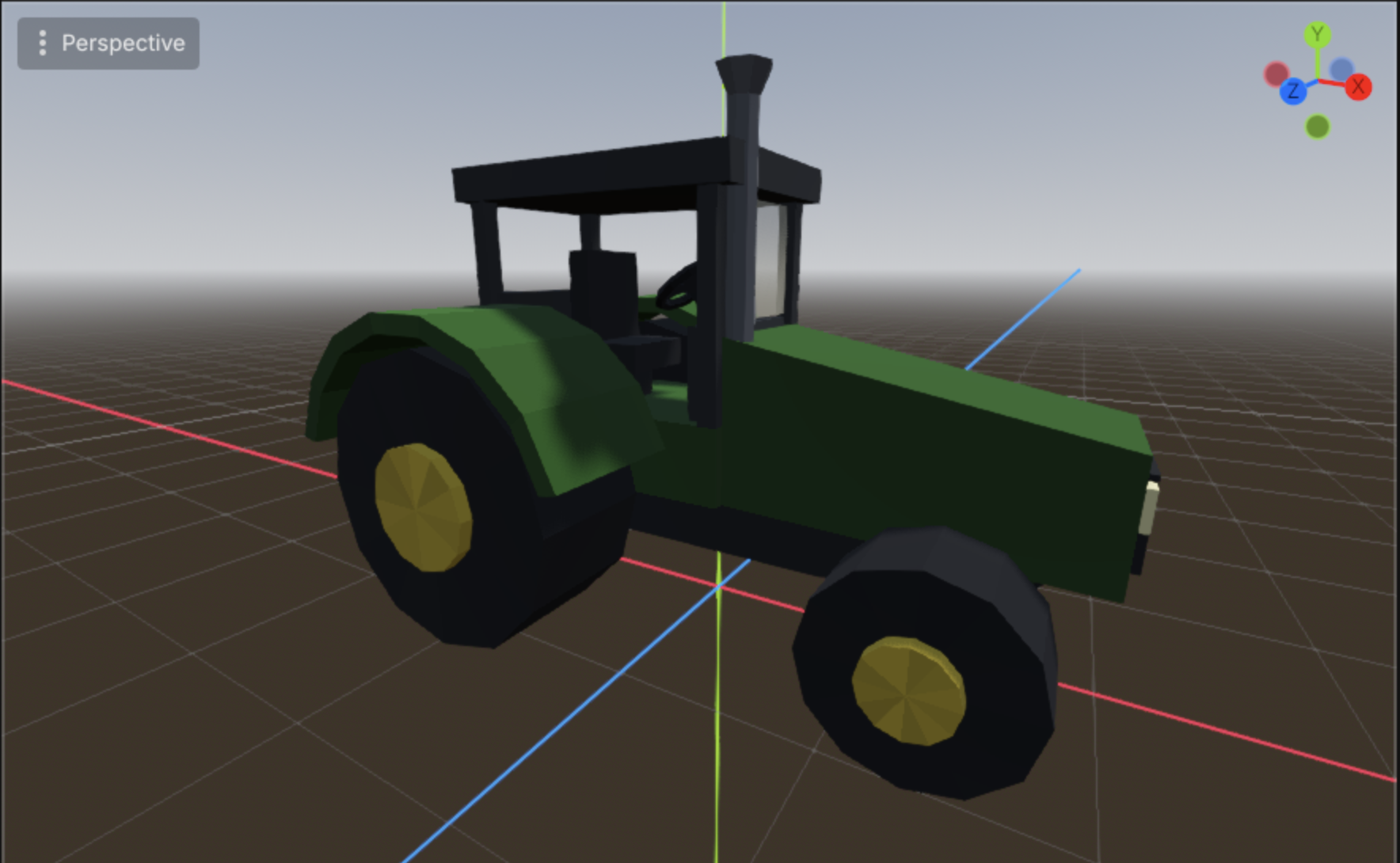
The tractor is the project's first heavy-machinery prop. It is deliberately not modelled as a working vehicle. No door animation. No engine sound. No ignition. It is a piece of landscape furniture that happens to look like a tractor.
The placement intent is to leave it half-finished at a job: in a furrow, in a field, behind a building, with the keys (presumably) still in the cab. The story is told by where it has stopped, and never by anything the tractor itself can do. The same trick the chair-and-anemometer arrangement at the outpost uses. The verb lives in the posture of the prop, never in any animation attached to it.
Polygon-wise, the tractor is the most expensive single prop in the library so far. The rear wheels alone are 32-segment cylinders. Less than that and the silhouette breaks. LODs will be a concern later, and this prop is the one that'll have to answer them.
The water tower
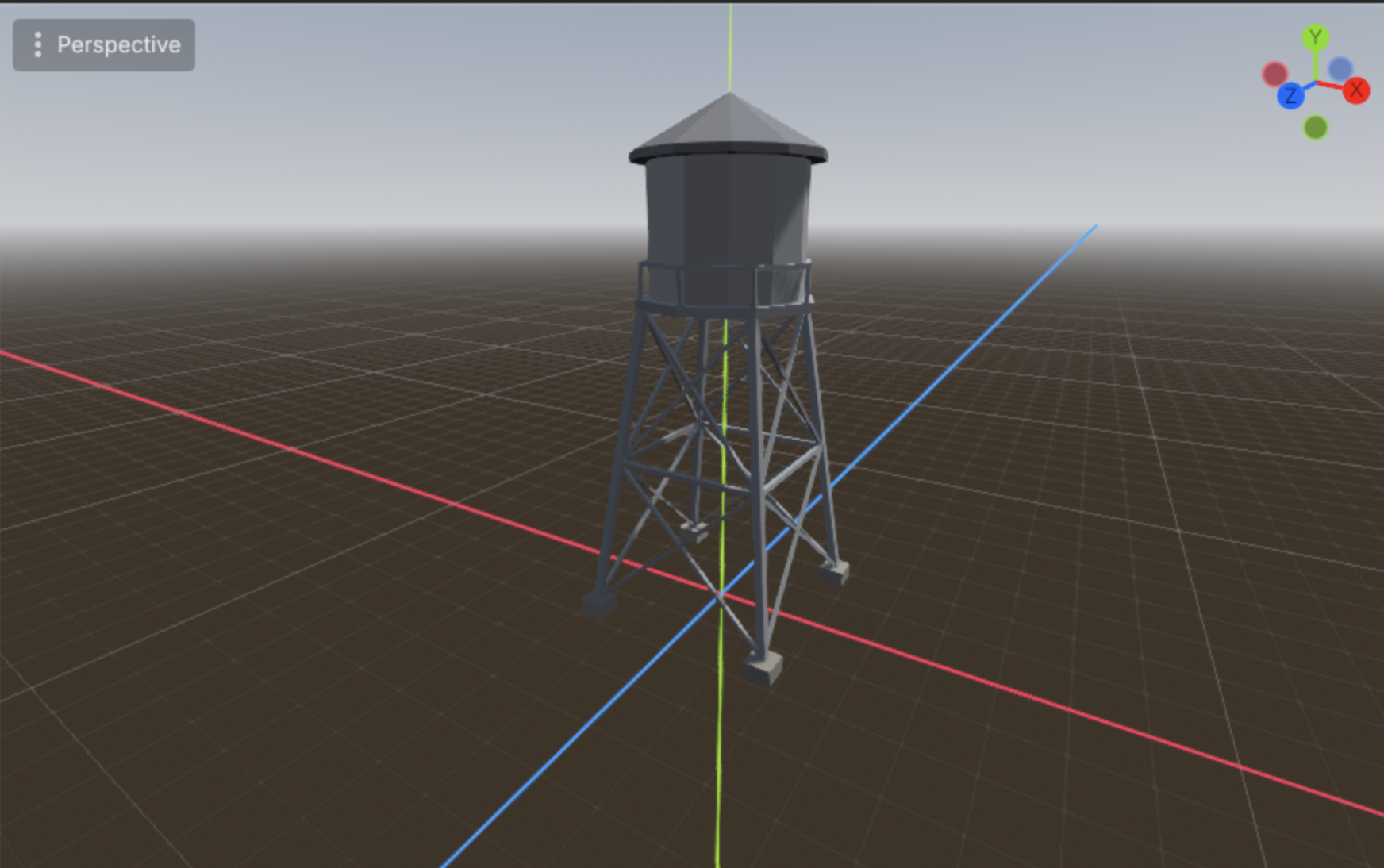
The water tower is the tallest prop in the library so far, and by intent the project's first landmark. The kind of thing the player sees from a kilometre away through the haze, and uses to orient themselves. Once procedural maps are real, the water tower will be one of the few props the generator places deterministically. One per region, on high ground, visible from the surrounding moor.
The lid is intentionally a low cone, rather than flat. Flat lids read as cans of beans at distance. Conical lids read as water towers. Small choice, large effect.
The water tower's other job, the one that matters more, is to be the moor's human-scale-mistake prop. The cabin sits inside the forest because it knows the forest. The church sits on its plain because that's the right place for an announcement. The outpost is fenced because the outpost is afraid. The water tower is on a hill because someone with a clipboard decided this hill was a good place for the parish's water supply. That decision is older than the affliction. The water tower is still standing because nobody has had the time to take it down. Pragmatism, calcified.
What's still missing
The farm family is the project's most under-populated. There's no barn, no fence, no plough, no animal trough. That's deliberate for now. The farm setpiece hasn't been designed yet, so adding farm props ahead of need would violate the project's "no machinery ahead of demand" rule.
The tractor and the water tower exist because they're useful now. The tractor as a piece of "abandoned modernity" prop that works anywhere. The water tower as a landmark. The rest of the family arrives when the farm setpiece does.